The Classic 3-Day Angel Falls Tour: Day-by-Day Itinerary
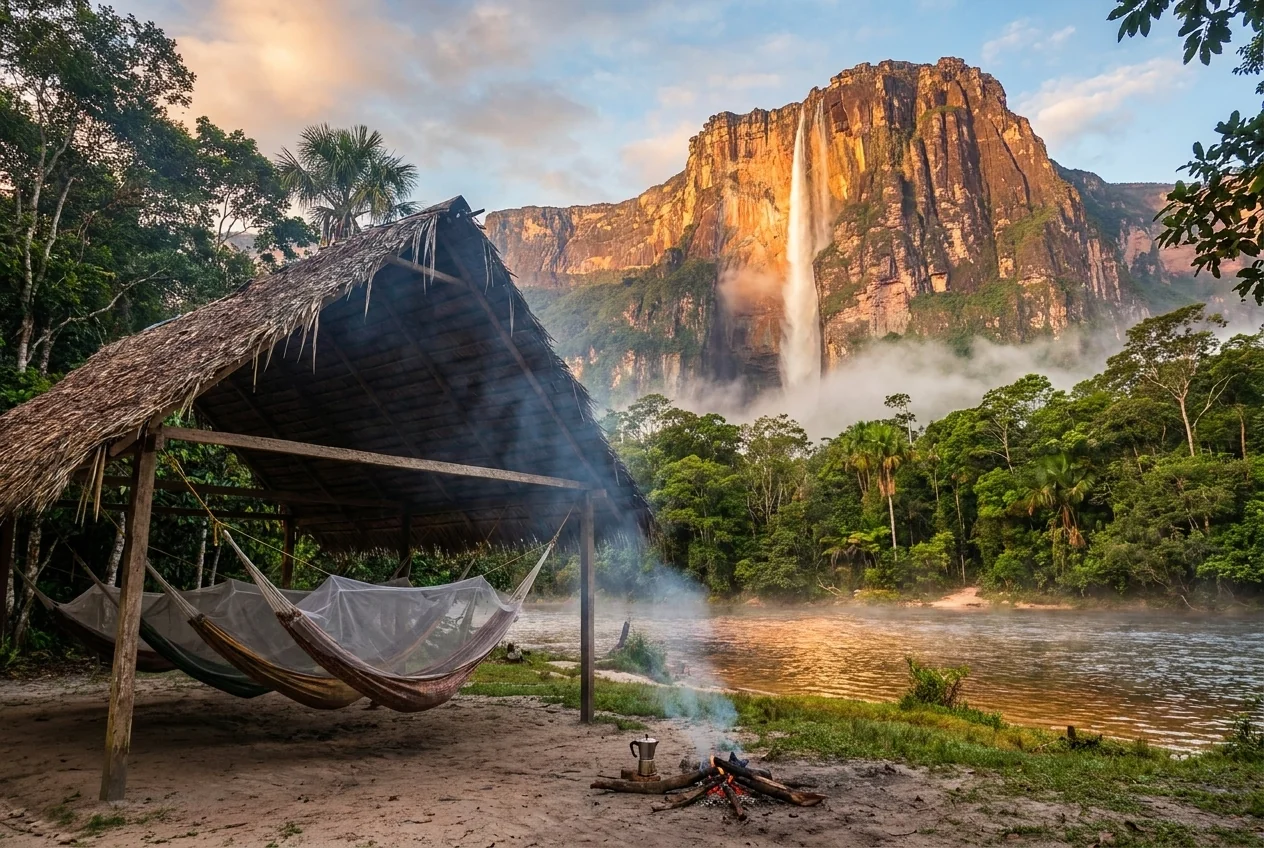
The standard way to see Angel Falls is a 3-day, 2-night tour that starts and ends in Canaima village. It is the trip almost every visitor takes, and once you understand its rhythm, the whole expedition stops feeling mysterious. You spend one long day getting up the river, a night at a camp near the falls, an early morning hike to the viewpoint, and a second long day coming back. This guide walks through each day hour by hour so you know exactly what to expect, what to carry, and where the hard parts are.
Before Day 1: Arriving in Canaima
The tour clock starts in Canaima village, so most travelers arrive the afternoon or morning before. You reach Canaima by charter flight from Ciudad Bolivar or Puerto Ordaz, a roughly 70-minute hop over the Gran Sabana in a small aircraft. There are no roads in.
Spend your first hours settling into a posada, meeting your operator, and confirming what the tour includes. Many travelers use the arrival afternoon for the short boat trip to Canaima Lagoon and the walk behind Salto Sapo, a strong warm-up that is often sold as an add-on. Keep your luggage light. Charter flights cap baggage at roughly 10 to 12 kg per person, and you will repack into a dry bag for the river.
Eat well and sleep early. Day 1 is long, and the river journey starts in the morning.
Day 1: The River Journey to the Falls
Day 1 is the big push upriver. After breakfast you board a curiara, the long motorized dugout canoe that is the only way to reach the base of Angel Falls. The route runs down the Carrao River and then up the Churun, roughly four to five hours of travel depending on water levels and stops.
Expect to get wet. In the rainy season the river runs fast and full, and rapids along the way often mean short walks around the roughest sections while the boatmen guide the empty canoe through. The scenery is the reward: sheer tepui walls rising straight out of the jungle, waterfalls streaking down the cliffs, and Auyan-tepui growing larger ahead of you.
You reach the jungle camp near the falls by afternoon. After settling in, most tours make the first hike to the Mirador Laime viewpoint, about 90 minutes each way through dense forest, for your first full sight of the 979-meter falls.
What the River Camp Is Like
The camp is basic and open to the jungle. You sleep in a hammock strung under a thatched churuata, with a mosquito net and a shared latrine nearby. There is a simple kitchen where guides cook dinner, usually chicken or fish with rice and plantain. There is no electricity beyond a generator or solar light and no phone signal. The soundtrack is rain, river, and insects.
Day 2: Sunrise at the Falls and the Return Leg
Many operators run the main viewpoint hike at first light on Day 2, when the falls are clearest before the midday clouds build. If you did the hike on Day 1, the morning may repeat it for better light or offer time to swim in the pools at the base.
The view from Mirador Laime is the centerpiece of the trip: a single column of water falling from the flat summit of Auyan-tepui, so tall that the lower half dissolves into mist before it lands. Photographers should shoot early. By late morning the top of the falls is often hidden in cloud.
After the falls, you break camp and start the return down the river. Going with the current is faster, so the trip back to Canaima is usually shorter than the way up. You arrive in the village by late afternoon, tired, wet, and done with the hardest part.
Day 3: Canaima Lagoon and Departure
Day 3 is lighter. Depending on your flight time, the morning is often used for the parts of Canaima that the river trip skips: the lagoon ringed by pink-tinged waterfalls, and Salto Sapo, one of the rare waterfalls in the world you can walk behind, passing between the rock face and the falling water.
Then you fly out. Charter departures from Canaima are weather-dependent and usually leave in the morning or midday, so build a buffer into your onward connections. If your international flight leaves Caracas the same evening, a delay in Canaima can cascade, so many travelers plan a night in Ciudad Bolivar or Caracas before flying home.
That is the classic loop: one hard day up, a morning at the falls, one day back, and a gentler final morning around the lagoon.
What to Pack for the River
Pack for wet, warm, and buggy. The single most useful item is a good dry bag to keep clothes, camera, and documents safe in the splashing canoe. Bring quick-dry clothing, a rain jacket, sandals with a heel strap or water shoes for the boat, and closed shoes for the muddy hike.
Strong insect repellent is not optional, and long sleeves help at dusk. Carry a headlamp for the camp, a reusable water bottle, sunscreen, and any personal medication in a waterproof pouch. A small towel and a change of dry clothes for camp make the evening far more comfortable.
Leave the bulk of your luggage at your Canaima posada and take only what fits in a small dry bag. You will be glad to carry less on the hike.
How the Itinerary Changes by Season
The 3-day structure holds year-round, but the experience shifts with the water. In the rainy season, roughly June to November, the river is high, the boat reaches the falls reliably, and the falls thunder at full volume. This is the classic version of the trip.
In the dry months, roughly January to March, river levels can drop too low for the curiara to complete the journey. When that happens, operators may substitute or add a flyover to see the falls from the air, since the boat route is not guaranteed. Ask your operator directly how they handle your specific dates.
April, May, and December sit in between and can go either way. Whatever the season, treat the schedule as weather-dependent. Flights, river levels, and cloud cover all bend the plan, and a good guide adapts on the day.
How Demanding the Days Are
The 3-day tour is an adventure, not an endurance test, but it is physical. The hardest parts are the long hours sitting in a moving canoe, the occasional walks around rapids over uneven ground, and the 90-minute hike to the viewpoint through mud, roots, and stream crossings. None of it requires special fitness, but a reasonable level of mobility and a tolerance for heat, humidity, and getting wet all make the difference.
The hike is the main test. It is not long, but the footing is rough and slippery, especially in the rainy season when the trail runs with water. Sturdy shoes and a walking pole help, and there is no shame in taking it slowly. Guides set a manageable pace and know the trail well.
Heat and sun on the open river can tire you more than the walking. Stay hydrated, cover up, and pace yourself. Most reasonably active adults, including older travelers who are steady on their feet, complete the classic tour comfortably. The reward at the viewpoint is worth every muddy step.
Managing the Heat and Wet
The single biggest comfort factor is staying dry when you can and accepting being wet when you cannot. Change into dry camp clothes each evening, keep a rain layer within reach on the boat, and drink more water than feels necessary. Small habits like these turn two demanding days into two enjoyable ones.
Extending Beyond Three Days
Three days is the minimum that makes sense, but if you have the time, extending the trip pays off. A 4-day version slows the pace, adds a second night at the falls or a full day exploring Canaima Lagoon and Salto Sapo, and reduces the risk that a single cloudy morning is your only chance at a clear view of the falls.
Longer itineraries can fold in a scenic flyover of Angel Falls, more time with your Pemon guides, or a side trip toward the wider Gran Sabana. The extra days are where the trip stops feeling like a dash to a viewpoint and starts feeling like a proper expedition into one of the wildest corners of South America.
The main trade-offs are cost and logistics. Each added day means more accommodation, meals, and guide time, and it lengthens your exposure to weather that can shift plans. For most travelers who have come this far, though, a fourth or fifth day is money well spent, because the hardest and most expensive part, simply getting to Canaima, is already done.
Two Nights at the Falls
Some operators offer a version with two nights at the river camp rather than one. The second night gives you two mornings to catch the falls at their clearest and a slower, more immersive stay in the jungle. If dawn light and photography matter to you, that extra night at the camp is one of the best upgrades on the whole trip.