The Boat Trip to Angel Falls: What the Curiara Journey Is Like
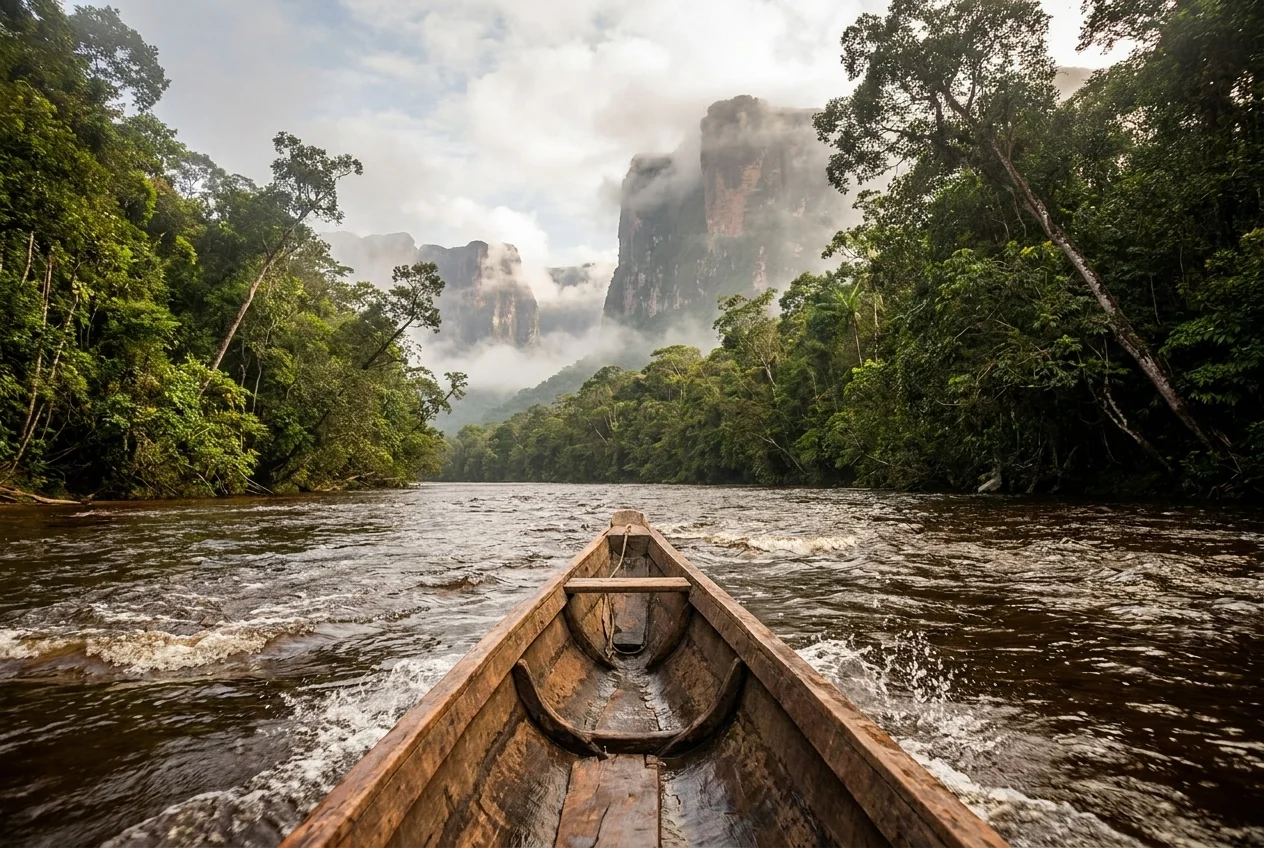
There is no road to Angel Falls and no trail you can hike from the outside. The only way to reach the base of the tallest waterfall on Earth is by water, in a long motorized dugout canoe called a curiara, up two jungle rivers, for the better part of a day each way. This river journey is not a transfer between the interesting parts of the trip. It is one of the interesting parts, a slow, wet, cinematic passage through a landscape few people ever see. This guide describes exactly what the boat trip is like, how long it takes, how comfortable it is, and how to prepare so you enjoy every hour of it.
What a Curiara Actually Is
A curiara is a long, narrow canoe, traditionally carved from a single tree trunk and now usually fitted with an outboard motor. It is the workhorse boat of the Pemon people and the standard transport into Canaima's rivers. You sit low, close to the water, on simple bench seats, often with other travelers, your guide, and a boatman who reads the river with practiced ease.
These boats are stable and built for exactly this work, but they are open to the sky. There is no cabin, no roof beyond a possible tarp, and no barrier between you and the spray. When the river is calm you glide; when it runs fast you feel every ripple. That closeness to the water is precisely what makes the journey memorable.
Do not picture a tour boat with railings and a snack bar. Picture a working canoe, low and long, threading between boulders and cliffs, carrying you deeper into one of the most remote corners of South America.
Who Steers the Boat
Your boatman and guide are almost always local Pemon, and their skill is the reason the trip is safe. They know where the rocks lie, when to gun the motor through a rapid, and when to have everyone walk around the roughest water while they guide the empty canoe through. Trust their instructions completely; this is their river and their livelihood.
The Route: Carrao and Churun Rivers
The journey follows two rivers. From Canaima you travel down the wide Carrao River, then turn up the narrower, faster Churun that leads into the heart of Auyan-tepui's country. The full trip to the falls camp takes roughly four to five hours each way, depending on water levels, the number of stops, and how much walking around rapids the river demands that day.
The scenery changes as you go. Early on the rivers are broad and the banks low; later the canyon tightens and the flat-topped tepuis rise on either side, their cliffs streaked with waterfalls after rain. Auyan-tepui, the vast mountain that Angel Falls pours from, grows steadily larger ahead until it fills the sky.
Because you are moving against the current on the way up, that leg is slower and more effortful for the boat. The return, running with the flow, is usually noticeably quicker, which is why most itineraries put the hardest travel on the first day.
Rapids, Portages, and Getting Wet
The rivers are not flat all the way. In several places the water quickens into rapids, and how the boat handles them depends on the season and the level. Sometimes the boatman powers straight through, drenching everyone aboard in a thrilling rush. Other times, especially where rocks are close to the surface, passengers climb out and walk a short stretch along the bank while the crew guides the lightened canoe through the rough water.
Expect to get wet regardless. Spray from the bow, the occasional rapid, and frequent rain all conspire to soak anything not sealed away. This is normal and part of the fun, but it is also why waterproofing your belongings is non-negotiable.
The portages, the short walks around rapids, are usually easy but can be muddy and uneven. Wear footwear with grip, watch your step on wet rock, and keep both hands free by carrying everything on your back rather than in your arms.
How Comfortable the Journey Is
Honesty helps here: the boat trip is wonderful, but it is not luxurious. You sit on a hard bench, low to the water, for hours at a stretch, often wet, in heat and humidity, with limited room to shift position. For most travelers the scenery more than compensates, but it helps to know what you are signing up for.
The things that make it comfortable are small and within your control. A dry set of clothes waiting at camp, a cushion or rolled towel to sit on, sun protection for the exposed hours, and enough water to stay hydrated all change the experience. So does the right mindset: this is a slow adventure, not a fast transfer.
Breaks punctuate the journey. The crew stops for lunch, at portages, and at viewpoints, giving you the chance to stretch, eat, and take photographs. By the time you reach the camp near the falls, you will be tired and damp, but almost everyone arrives grinning.
Motion, Sun, and Bugs
A few travelers find the low seating and constant motion tiring, so if you are prone to motion discomfort, sit toward the middle and keep your eyes on the horizon. The open sun on the water can burn quickly, so cover up and reapply sunscreen. At stops and toward dusk, insects appear, making strong repellent and long sleeves worth having within reach the whole way.
When the River Trip Runs
The boat journey is a creature of the seasons. In the rainy season, roughly June to November, the rivers run high and full, the curiara reaches the falls reliably, and the water thunders at its most dramatic. This is the classic version of the trip and the reason most visitors come in these months.
In the dry season, roughly January to March, river levels can drop too low for the canoe to complete the route to the falls. When that happens, the boat trip may be shortened, replaced, or supplemented with a flyover, since reaching the base by water simply cannot be guaranteed. April, May, and December sit in between and vary year to year.
Because conditions shift, treat any schedule as weather-dependent and confirm with your operator how they plan to reach the falls during your specific dates. An honest operator will tell you plainly if the river may be too low and what the backup is.
How to Prepare for the Boat
Good preparation turns a demanding day into a great one. The single most important item is a quality dry bag to keep your camera, documents, spare clothes, and any cash sealed against spray and rain. Everything you want to stay dry goes inside it; assume anything left loose will get soaked.
Dress for wet and warm. Quick-drying clothes, a rain jacket, and secure footwear with grip, either sturdy sandals with a heel strap or water shoes, serve you far better than cotton and flip-flops. Add a hat, sunglasses, sunscreen, strong insect repellent, and a reusable water bottle you can refill at camp.
Pack light. The curiara has limited space and you will also carry your bag on the portages and the hike, so take only what you need for the river and the camp, and leave the rest at your Canaima posada. A little discipline here pays off with every step and every rapid.
Protecting Your Camera
Cameras and phones are the most common casualties of the river. Keep them in the dry bag between shots, use a waterproof pouch or housing if you want to shoot from the boat, and bring a microfiber cloth for the constant mist on the lens. A single splash at the wrong moment can end your photography for the trip, so treat every rapid as a threat to your gear.
The Views and Wildlife Along the Way
The reason the boat trip is a highlight rather than a chore is what unfolds around you. For hours you slide beneath flat-topped tepuis whose sheer cliffs rise straight from the jungle, streaked after rain with ribbon waterfalls that appear and vanish. Auyan-tepui, the mountain Angel Falls falls from, dominates the horizon and grows steadily more immense as you approach.
The riverbanks are dense, living walls of forest. Depending on the season, the light, and a little luck, you may glimpse birds working the water's edge, butterflies clouding the shallows, and the occasional larger creature moving through the trees. This is not a wildlife safari, so treat sightings as bonuses rather than guarantees, but the sense of passing through untouched wilderness is constant.
The best views often come at the quiet moments, when the motor eases and the canyon reflects on still water. Keep your camera reachable but protected, and spend as much of the journey looking up and out as down at a screen. The landscape here is the show, and it rarely lets up.
Photographing From the Boat
Shooting from a moving, splashing canoe is a challenge. Use a fast shutter to freeze the motion, keep a lens cloth handy for the constant mist, and hold your camera in a waterproof pouch between shots. Some of the most striking images come from the tightest stretches of canyon, so be ready when the walls close in and the tepuis loom overhead.