Cameras, Drones, and Dry Bags: Protecting Your Gear at Angel Falls
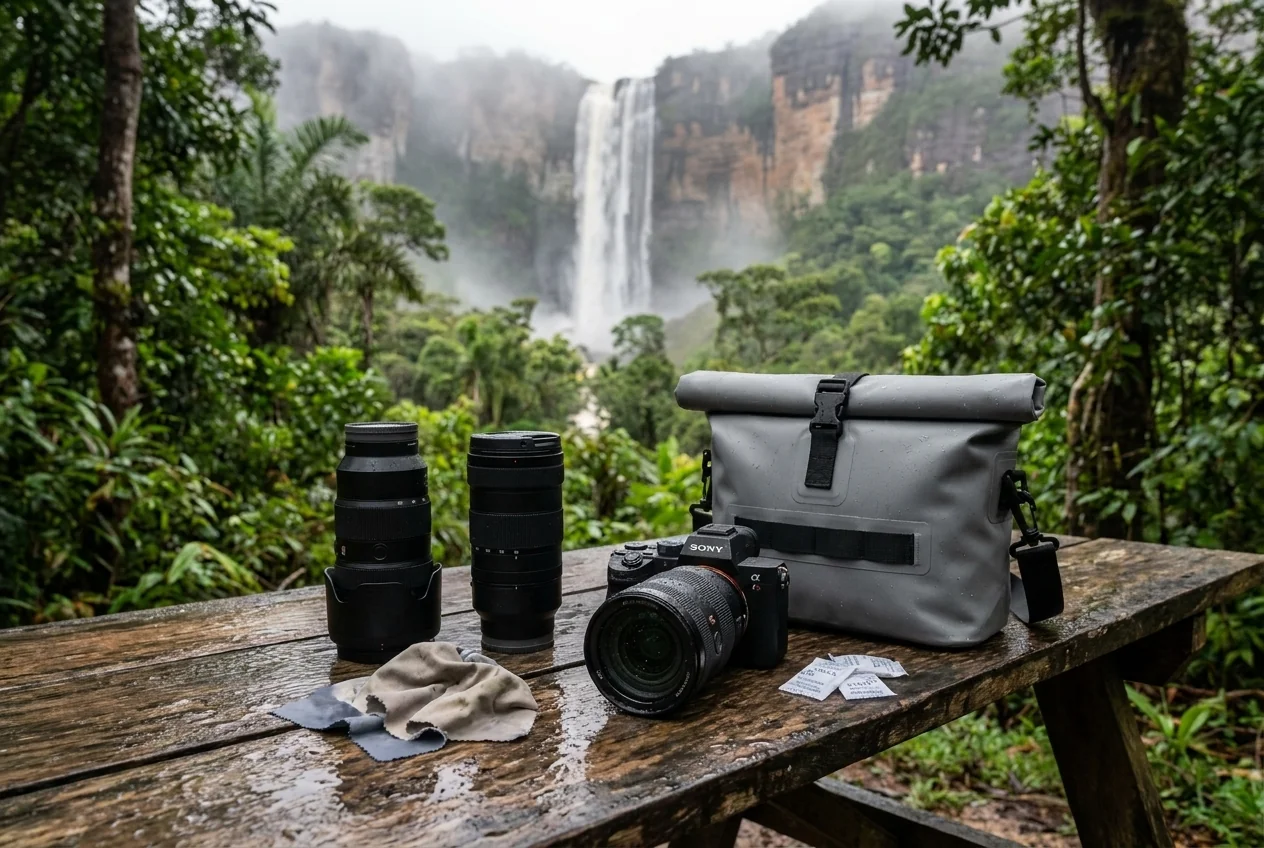
The Angel Falls trip is a photographer's dream and a photographer's nightmare in equal measure. You are carrying expensive, delicate gear through constant river spray, tropical humidity, mud, and rain, into a place where a soaked camera cannot be repaired or replaced. Ruined equipment is one of the most common and most avoidable disappointments of the trip. This guide covers exactly how to protect your cameras, drones, batteries, and lenses against the water and grit of the jungle, so you come home with the images you traveled for rather than a bag of dead electronics.
The Threats to Your Gear
Understanding what you are protecting against shapes every decision. The biggest threat is water, and it comes from all directions: spray off the bow of the curiara, drenching rapids, frequent rain, mist at the falls, and the splashing of stream crossings on the hike. Anything not sealed will get wet, often repeatedly.
Humidity is the quieter danger. Even when nothing is actively splashing your gear, the tropical air holds enough moisture to fog lenses, encourage mold, and creep into electronics over days. Condensation when moving between temperatures adds to the problem.
Then there is grit: fine sand and mud from riverbanks and trails that works into moving parts and scratches lenses. Add the risk of drops on wet rock and the sheer difficulty of keeping anything clean, and you can see why casual gear handling fails here. Plan for a hostile environment and your equipment survives; assume it will be fine and it often will not.
Dry Bags Are Non-Negotiable
The single most important piece of gear protection is a quality dry bag, and ideally more than one. A proper roll-top dry bag keeps your camera, lenses, and electronics sealed against spray and rain in the open canoe, and it is the difference between arriving with working equipment and arriving with a write-off.
Use a layered approach. A large dry bag protects everything on the boat; smaller dry pouches or cases inside organize and add a second line of defense. Keep your camera in a sealed bag between shots rather than slung around your neck where the next rapid can drench it.
Do not rely on a bag that is merely water-resistant or a backpack with a rain cover; the curiara environment demands genuinely waterproof, sealable storage. Test your dry bag before the trip, close it properly every single time, and treat the discipline of resealing as seriously as the bag itself. A dry bag left open is no protection at all.
Shooting From the Boat Safely
If you want to shoot during the river journey, use a waterproof housing, a dedicated waterproof camera, or a robust waterproof pouch you can operate through, and secure it with a strap so a lurch cannot drop it in the river. Between shots, reseal it in the dry bag. Never leave your main camera loose and exposed on the boat, however good the light looks.
Managing Humidity and Condensation
Water you can see is easy to guard against; the humidity you cannot is trickier. Pack silica gel or other desiccant packets in your camera bag and dry pouches to absorb moisture, and refresh or add them over a longer trip. They quietly protect against fogging and mold in the damp air.
Condensation strikes when gear moves between temperatures, for instance from a cool morning into heat, or from an air-conditioned room into the humid outdoors. Let equipment acclimatize gradually in its bag before opening it, so moisture forms on the bag rather than inside your lens or camera body.
At camp, keep your gear sealed in its dry storage with desiccant rather than leaving it out in the open air overnight. A microfiber cloth for wiping mist from lenses is a constant companion. These small habits prevent the slow, invisible moisture damage that can ruin gear even when it never takes a direct splash.
Using Desiccant Effectively
Silica gel packets lose their capacity as they absorb moisture, so bring plenty and, on a longer trip, a way to keep some fresh, such as sealed spares. Store them with your camera and lenses in a closed dry pouch so they work on a small volume of air. Cheap and light, desiccant is one of the most cost-effective forms of gear insurance you can pack.
Drones: Rules, Reality, and Risk
A drone can capture Angel Falls in ways nothing else can, but flying one here comes with real caveats. First, permissions: Canaima is a protected national park and a sensitive area, so you must check the current rules on drone use with your operator and the relevant authorities before you travel, and never assume flying is allowed. Regulations and enforcement can change.
Second, the environment is brutal on drones. Wind around the tepuis and falls can be strong and unpredictable, spray and humidity threaten the electronics, and a lost or crashed drone in this terrain is simply gone. The falls' scale and the swirling air near the cliffs make flying challenging even for experienced pilots.
If you do bring a drone with proper permission, protect it like your camera: sealed storage, spare batteries kept dry and warm, and extreme caution near the falls and in wind. Weigh the reward against the very real chance of losing it. For many travelers, the risk and the rules make a drone more trouble than it is worth here.
Check Permissions First
Do not pack a drone assuming you can fly it. Confirm well ahead with your operator and the appropriate authorities whether drone use is permitted in Canaima National Park and under what conditions, since flying without permission in a protected area can cause serious problems. Getting a clear answer before you travel saves you from carrying gear you cannot legally use.
Power, Batteries, and Storage
Great gear protection is wasted if your batteries die. Power is unreliable in Canaima and absent at the river camp, so bring far more battery capacity than you think you need: multiple camera batteries, a high-capacity power bank charged fully in Ciudad Bolivar, and the right cables for everything.
Keep batteries dry and, in cooler conditions, reasonably warm, since damp and cold both sap their charge. Store spares in a sealed pouch with desiccant. Ration your shooting across the offline days so you are not left with a dead camera at the falls' most photogenic moment.
Memory is the other resource. Bring more storage than you expect to fill, since you cannot offload to the cloud with no signal, and keep cards in a waterproof case. Back up to a second card or a rugged drive at camp if you can. Running out of power or storage at Angel Falls is as ruinous to your photography as a soaked camera, and just as avoidable with planning.
Packing and Handling in the Field
How you handle gear day to day matters as much as how you pack it. Carry your equipment on your back with both hands free for the portages and the muddy hike, never in your arms where a slip means a drop. Pack heavy items low and secure so nothing shifts in the canoe.
Build simple routines: reseal the dry bag every time, wipe lenses with a microfiber cloth before shooting, and never open your main storage in the rain or spray if you can wait for a sheltered moment. Clean grit off gear gently before it works into moving parts. These habits become second nature and quietly save your equipment.
Finally, bring only what you will realistically use. Every extra body and lens is more to protect, carry, and lose in a demanding environment. A thoughtfully minimal, well-protected kit almost always outperforms a heavy bag of gear you are too busy shielding to use. Protecting your equipment is ultimately about discipline, not just having the right cases.
A Pre-Trip Gear Checklist
Before you leave, assemble and test the essentials: a genuinely waterproof dry bag, waterproof pouches or housing, silica gel, a microfiber cloth, spare batteries, a high-capacity power bank, spare memory cards in a waterproof case, and the right cables. Practice sealing and accessing your gear at home. Arriving with a rehearsed, protected kit is what keeps your photography alive in the jungle.