How Hard Is the Angel Falls Trip? Fitness, Difficulty, and Who Can Do It
The question almost everyone asks before booking is simple: can I actually do this? The Angel Falls trip has a reputation for being an expedition, and that word scares off people who would handle it comfortably while giving false confidence to others who underestimate the heat and the wet. The honest answer is that this is a moderate adventure, not a technical mountaineering feat. Most reasonably active adults manage it well. This guide breaks down exactly where the difficulty lies, what fitness you really need, who should think twice, and how to prepare so the hard parts feel easy.
Where the Real Difficulty Lies
The trip is not hard because of any single brutal challenge. It is demanding because of accumulation: long hours in a low canoe, heat and humidity that sap energy, being wet for much of the day, and a hike over rough, slippery ground. None of these is extreme on its own, but together they ask for stamina and a tolerance for discomfort.
The two physical tests are the river journey and the hike to the viewpoint. The river means sitting for four to five hours each way on a hard bench, with occasional walks around rapids over uneven banks. The hike is roughly 90 minutes each way through jungle, with mud, roots, and stream crossings underfoot.
Neither requires athletic training. What they require is the ability to walk steadily on uneven terrain for a couple of hours, sit for long periods, and keep going in tropical heat. If you can manage a moderately hilly day hike at home, you can manage this.
The Hike to the Viewpoint
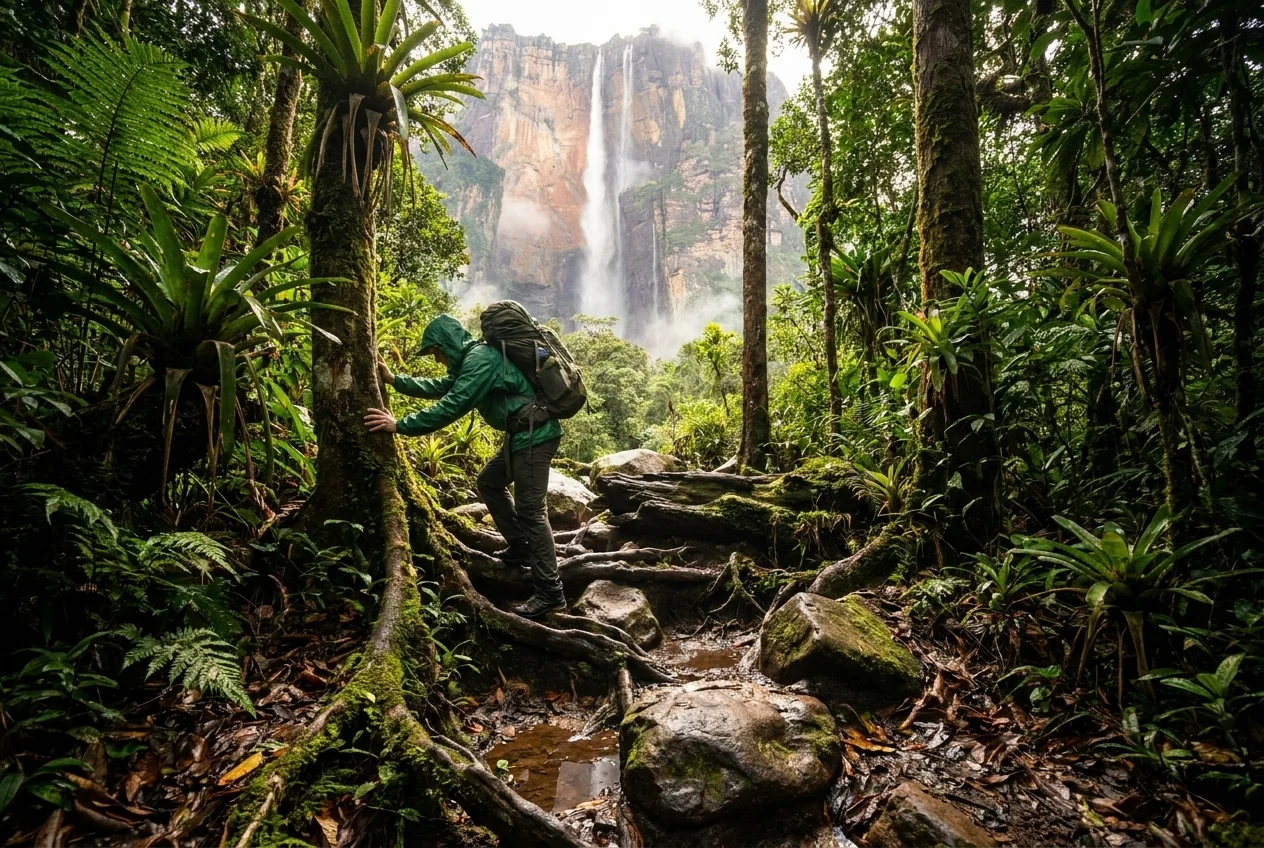
The centerpiece walk is the trail from the river camp to the Mirador Laime viewpoint, the spot where the full 979-meter height of Angel Falls comes into view. It runs about 90 minutes each way through dense forest, and while it is not long, the footing is the challenge.
Expect mud, exposed tree roots, rocks, and small stream crossings, all of it more slippery in the rainy season when the trail runs with water. There is some up and down but no serious climbing. The pace is set by your guide and is entirely manageable, with rests whenever the group needs them.
Good footwear with grip and a trekking pole make a real difference on this trail, especially on the wet descent. Take your time, watch each step on the slick sections, and there is no reason a steady walker cannot reach the viewpoint and back comfortably. The sight at the end erases the effort.
Swimming at the Base
Many tours offer time to swim in the pools below the falls after the hike. The water is cold and refreshing, and reaching the pools may involve scrambling over rocks. It is optional and rewarding, but if you are unsure on your feet over wet boulders, there is no pressure to do it. Enjoy the view and skip the scramble if it feels risky.
The River Journey as a Physical Test
People underestimate how tiring hours in a canoe can be. You sit low and close to the water on a hard bench, often unable to stretch out, in sun and heat, sometimes for four or five hours at a stretch. The motion, the exposure, and the wet all add up over a long day.
At several points you will climb out to walk around rapids, stepping over muddy, uneven banks and slick rocks. These portages are short and easy for most people, but they demand steady balance and grip. Carrying your bag on your back keeps your hands free and makes them simpler.
The good news is that the river asks for endurance rather than exertion. You are not paddling; the motor does the work. Your job is to sit comfortably, stay hydrated and protected from the sun, and manage the portages carefully. Prepare for a long, exposed day and it becomes a pleasure rather than a trial.
Heat, Humidity, and Staying Well
The tropical climate is a bigger factor than the terrain. Canaima is hot and humid, and the combination tires you faster than the same activity would in a temperate place. Dehydration and heat fatigue, not the hike itself, are the most common reasons travelers feel rough on the trip.
The defenses are simple and effective. Drink far more water than you think you need, cover up against the sun on the open river, take the rests your guide offers, and eat properly at camp to keep your energy up. Electrolyte sachets are a small, light addition that helps a lot in the heat.
Getting wet constantly can also chill you at night or lead to skin irritation and blisters if you stay in damp clothes. Change into a dry set at camp, keep your feet as dry as you can between activities, and treat hot spots before they become blisters. Manage the climate and the trip feels far easier.
Who Should Think Twice
This is a moderate adventure, but it is not for everyone. People with serious heart or respiratory conditions, significant mobility limitations, or difficulty walking on uneven ground should weigh it carefully and consult a doctor, because the remoteness means medical help is hours away at best.
The trip's biggest risk is not the difficulty but the isolation. There is no road, no clinic near the falls, and no quick evacuation. A problem that would be minor at home becomes serious in a place this far from help. That is why honest self-assessment and proper travel insurance with medical evacuation cover are essential.
Age itself is less important than fitness and steadiness on your feet. Plenty of older travelers who stay active complete the classic tour happily, while some younger visitors struggle with the heat. If you are unsure, tell your operator your real fitness level and ask about gentler options, such as a flyover, that let you see the falls with less physical demand.
Gentler Ways to See the Falls
If the full river-and-hike expedition is beyond your comfort or ability, you can still see Angel Falls. A scenic flyover by light plane or helicopter shows you the falls from the air with no hiking at all, and the Canaima Lagoon and Salto Sapo offer accessible waterfall experiences close to the village. These options mean almost anyone who can fly to Canaima can experience the region.
How to Prepare Your Body
You do not need a training program, but a little preparation makes the trip noticeably easier. In the weeks before you go, take some walks on uneven terrain and hills to ready your legs and balance for the trail. If you are not used to activity in heat, that adjustment is the one worth making.
Break in your footwear well before you travel so the muddy trail is not also your shoes' first outing. Pack blister plasters, a trekking pole if you like the support, and any personal medication in a waterproof pouch. Arrive rested rather than jet-lagged and hungover from travel days.
Most of all, calibrate your expectations. Go in knowing it will be hot, wet, and physically active, and the reality lands as a manageable adventure rather than a shock. Travelers who prepare their bodies and their mindset almost always describe the trip as easier than they feared.
The Insurance You Must Have
Because evacuation from the jungle around Angel Falls can cost tens of thousands of dollars, comprehensive travel insurance with medical evacuation cover is not optional for this trip. Confirm your policy actually covers Venezuela and adventure activities like river travel and hiking, since many standard policies exclude one or both. It is the most important preparation you will do.
Traveling as a Mixed-Fitness Group
Many people come to Angel Falls with a group whose members are not all equally fit: a couple with different stamina, a family spanning generations, or friends of varied ability. The trip can absolutely work for mixed groups, but it takes a little planning so the least comfortable member is not left struggling.
Start by matching the itinerary to the slowest or least steady person, not the fittest. Consider a private or small-group tour rather than a large shared one, so the pace can flex to your group and no one holds up strangers. Build in extra rest days and buffer time so a tired member can recover.
Talk to your operator honestly about the range of fitness in your party and ask how they handle it. A good operator will suggest where the whole group goes together and where someone might opt for a gentler alternative, such as staying at the lagoon or taking a flyover while others do the full hike. Planning for the range, rather than the average, keeps the trip enjoyable for everyone.
Letting Members Opt Out Gracefully
Not everyone in a group has to do everything. One person can enjoy the Canaima Lagoon and Salto Sapo while others tackle the river expedition, or swap the base-pool scramble for the view alone. Framing these choices as normal, not as failure, keeps morale high and lets each traveler experience the falls at a level that suits them.