Angel Falls Flyover vs Boat Expedition: Which Way to See the Falls
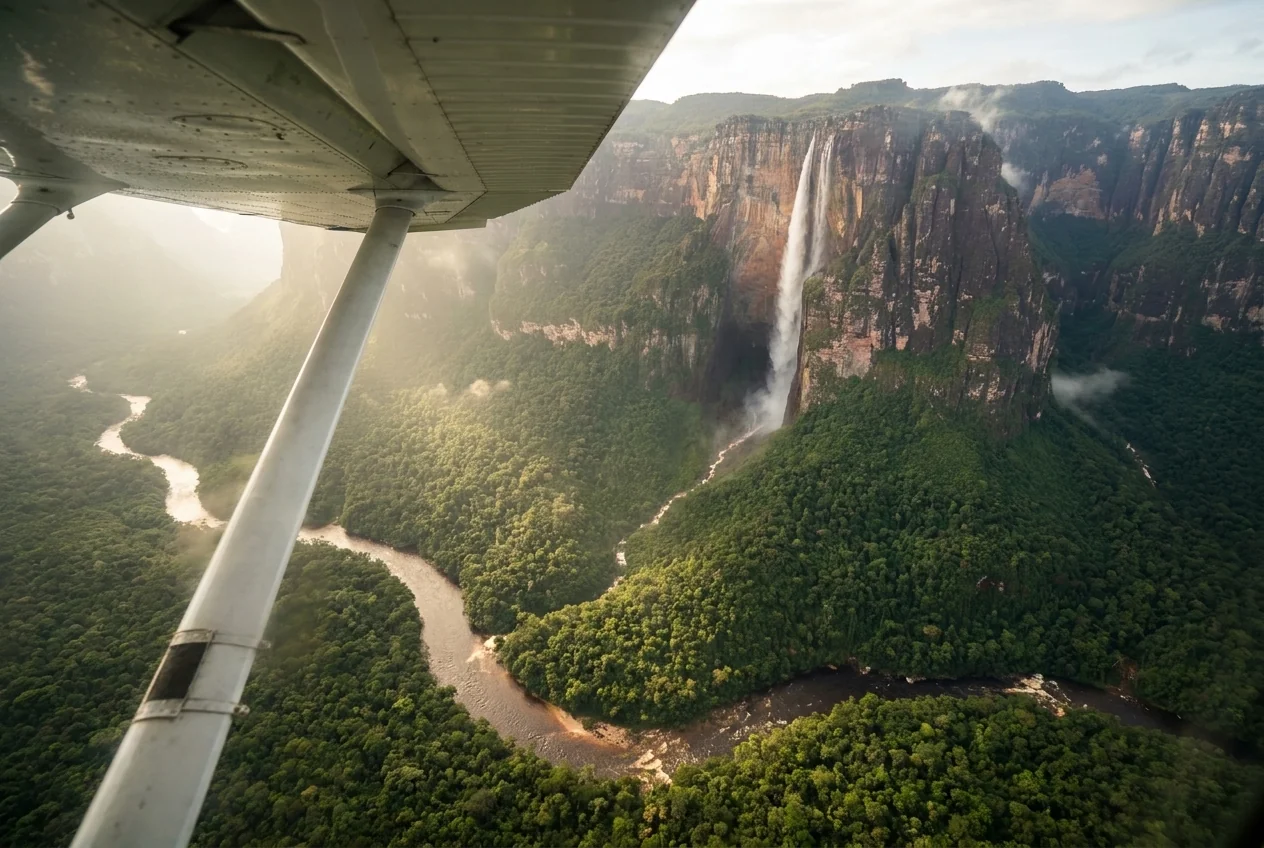
There are two ways to see Angel Falls, and they deliver very different experiences. You can fly over it, a short scenic flight by light plane or helicopter that shows the full height of the falls from the air, or you can make the boat expedition, a multi-day river journey to stand at the base and hike to the viewpoint. One is quick, easy, and weather-dependent; the other is slow, demanding, and immersive. This comparison weighs the flyover against the boat trip across cost, time, effort, season, and the view itself, so you can choose the way that fits your trip, or combine both.
TL;DR: Take the flyover if you have limited time, limited mobility, or you visit in the dry season when the river cannot reach the falls; it is quick, less demanding, and shows the full height from the air. Take the boat expedition if you want the immersive, multi-day adventure of reaching the base on foot in the rainy season. They are not rivals so much as different experiences, and doing both, a flight for the aerial view and a boat trip for the ground-level awe, is the ideal if budget and time allow.
| Criterion | Scenic Flyover | Boat Expedition |
|---|---|---|
| What It Is | A scenic flight by light plane or helicopter, typically under an hour, showing the full falls from the air. | A multi-day river journey by motorized canoe to the base, with jungle camps and a hike to the viewpoint. |
| Time Required | Under an hour in the air, easily done in a day around Canaima. | A classic 3-day expedition, or 4 to 5 days for a fuller trip. |
| Physical Effort | Minimal. You only need to board and leave a small aircraft. Suitable for nearly anyone. | Moderate. Long canoe days plus a roughly 90-minute hike over uneven, muddy ground. |
| Best Season | Most reliable in the dry season, roughly December to April, when skies are clearest, though available year-round, weather permitting. | Rainy season, roughly June to November, when the river reliably reaches the falls and water is at its fullest. |
| The View | The full 979-meter height from the air, the whole falls and Auyan-tepui in one sweep, but from a distance and briefly. | The falls from the base looking up, immersive and close, with time to swim in the pools and absorb the scale. |
| Cost | Fixed-wing flights roughly $150 to $200, helicopter roughly $250 to $350 per person, on top of reaching Canaima. | A 3-day tour roughly $350 to $800 per person, plus the charter flight and park fee. |
| Who It Suits | Time-poor travelers, those with limited mobility, dry-season visitors, and anyone wanting the aerial perspective. | Adventurers with a few days who want to reach the falls on the ground and live the full expedition. |
The Flyover: Fast, Easy, and Aerial
A scenic flight over Angel Falls is the quick, accessible way to see the tallest waterfall on Earth. In under an hour, a light plane or helicopter carries you over the jungle and along the cliff of Auyan-tepui, revealing the full 979-meter drop in a single sweep that the ground view cannot offer. For many travelers it is a breathtaking highlight.
The flyover's great strengths are speed and low effort. There is no hiking, no camping, and no long river journey, just boarding a small aircraft. That makes it ideal for travelers with limited time, limited mobility, or families with mixed abilities, and it is often the only way to see the falls well in the dry season when the river is too low for the boat.
The trade-offs are distance and brevity. You see the falls from the air, not from beneath them, and the experience is measured in minutes, not days. Flights are also weather-dependent, so clear conditions matter, which is part of why the dry season, with its steadier skies, suits them best.
The Boat Expedition: Slow, Hard, and Immersive
The boat expedition is the classic Angel Falls adventure. Over several days you travel by motorized canoe up the Carrao and Churun Rivers, camp in hammocks near the falls, and hike about 90 minutes to the viewpoint, ending at the base of the falls where you can swim in the cold pools and feel the true scale of the place.
This is an immersive journey, not a quick sight. You experience the rivers, the jungle, the tepuis growing overhead, the Pemon guides and camps, and the falls from directly below, looking up at water pouring from a cliff so high the top disappears into cloud. For travelers who want the adventure as much as the view, nothing compares.
The cost is time and effort. The trip takes days, demands moderate fitness, and means getting wet, muddy, and disconnected. It also depends on the rainy season, roughly June to November, when the river reliably reaches the falls. For the full detail of the journey, see our guide to the boat trip to Angel Falls.
Cost and Time Compared
The two options sit at different points on both cost and time. A flyover is comparatively cheap and fast: fixed-wing scenic flights run roughly $150 to $200 per person and helicopters roughly $250 to $350, and the whole thing fits into a day around Canaima, on top of the cost of getting there.
The boat expedition is a larger commitment. A classic three-day tour runs roughly $350 to $800 per person, plus the charter flight to Canaima and the park fee, and it consumes several days of your itinerary. You are paying for an experience measured in days, not minutes.
So if your budget or your calendar is tight, the flyover delivers the falls for less money and less time. If you have the days and want the full adventure, the boat trip's greater cost buys something the flight cannot: the immersive journey to the base. Weigh both what you can spend and what days you can give.
How Season Decides for You
Season often makes the choice for you, or at least tilts it. In the rainy season, roughly June to November, the river runs high, the boat reliably reaches the falls, and the water is at full thunder, so the boat expedition is at its best. The flyover still works when skies are clear, but wet-season cloud can obscure the falls from the air.
In the dry season, roughly December to April, the falls thin and river levels can drop too low for the canoe to reach the base, sometimes ruling out the classic boat trip altogether. Meanwhile the clearer, more stable skies make the flyover more reliable and rewarding. In the driest months, a flight may simply be the best or only way to see the falls well.
So before choosing, look at when you are traveling. Rainy-season visitors lean toward the boat; dry-season visitors lean toward the flyover. Confirm current conditions with your operator, since the seasons shift year to year and they know whether the river is running right now.
Why Not Do Both
The flyover and the boat trip are not really competitors; they show you the same falls in complementary ways, and if your budget and schedule allow, doing both is the ideal. Many travelers on the multi-day expedition add a scenic flight, combining the immersive ground-level awe with the sweeping aerial perspective.
Seen together, the two experiences complete each other. The flight gives you the whole falls and Auyan-tepui in one frame, impossible to grasp from below; the boat trip gives you the scale, sound, and physical journey the air cannot. One is a panorama, the other an immersion.
If you can only do one, let your time, fitness, budget, and season decide, and either way you will have seen the tallest waterfall on Earth. But if you have come all this way and can manage it, adding a flyover to the boat expedition, or a boat trip to a flight, turns a single view into a complete portrait of Angel Falls.
The Verdict
Neither option is better in the abstract; the right one depends on your time, fitness, budget, and season. Choose the flyover if you are short on days, have limited mobility, or visit in the dry season when the river cannot reach the falls; it is quick, easy, and delivers the full height from the air. Choose the boat expedition if you have several days and want the immersive, physical adventure of reaching the base on foot in the rainy season. If you can, do both, a flight for the aerial sweep and a boat trip for the ground-level awe, and you will experience Angel Falls as completely as any traveler can. Start with our Angel Falls planning guide to build the trip around your choice.