Angel Falls for Older Travelers: Comfort, Pace, and What to Expect
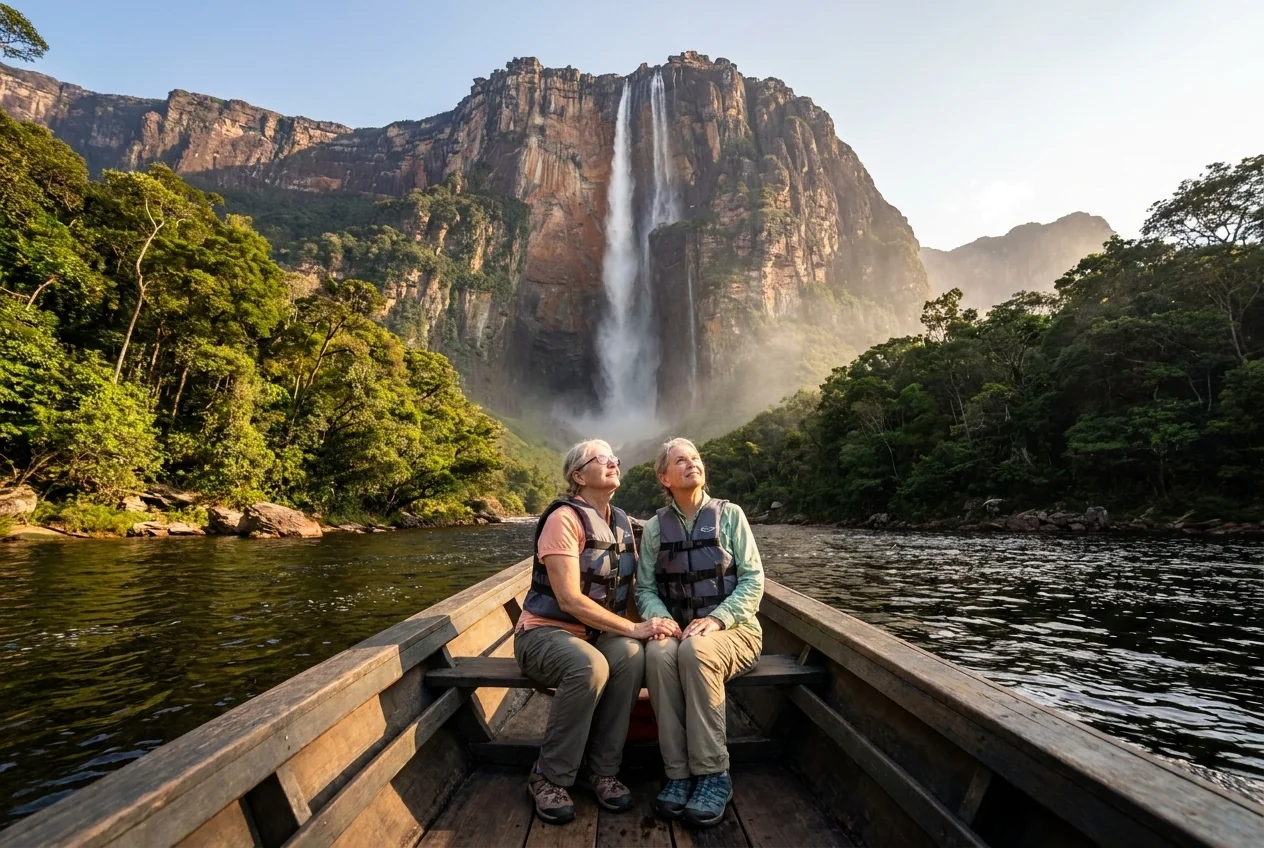
Plenty of travelers reach their sixties, seventies, and beyond wondering whether Angel Falls is still within reach, and for most active older travelers the honest answer is yes, with the right planning. The trip is remote and physical, but it is flexible, and there is more than one way to experience the tallest waterfall on Earth. From the full river expedition to a gentle scenic flight, you can dial the effort to suit your body. This guide is written for older travelers and the families planning with them, covering how manageable the trip really is, the gentler options, and how to make it comfortable and safe.
Is the Trip Realistic for Older Travelers
The classic Angel Falls expedition is a moderate adventure, not a technical feat, and many older travelers who stay active complete it happily. The demands are long hours in a canoe, some walking around rapids, and a roughly 90-minute hike over uneven, often muddy ground. None of it requires athletic fitness, but it does ask for reasonable mobility, steadiness on your feet, and a tolerance for heat.
The biggest consideration is not age but the region's remoteness. Medical help is hours away, so any significant health condition deserves careful thought and a doctor's input. A fit, steady 70-year-old may handle the trip more comfortably than a sedentary 40-year-old.
The key is honesty and planning. Assess your own mobility and health realistically, involve your doctor, and choose the version of the trip that fits. Angel Falls is genuinely open to older travelers who prepare well and pick the right approach, and it need not be an all-or-nothing decision.
Gentler Ways to See the Falls
The most important thing to know is that the strenuous river-and-hike expedition is not the only way to experience Angel Falls. A scenic flight by light plane or helicopter shows you the full height of the falls from the air with no hiking at all, and it is suitable for travelers who cannot manage the trek. For many older visitors, a flyover is the ideal way to see the falls in comfort.
Around Canaima village, gentler experiences abound. The Canaima Lagoon, ringed by waterfalls, offers beautiful, easy sightseeing and calm swimming close to the village, and Salto Sapo can be enjoyed at your own pace. These deliver the magic of the region without the demanding river journey.
You can also mix and match. Some older travelers do the flyover and the lagoon while younger family members tackle the full expedition, then everyone reunites in the village. Framing the trip this way means almost anyone who can fly to Canaima can experience Angel Falls at a level that suits them.
The Flyover Option in Detail
A scenic flight over Angel Falls typically lasts under an hour and delivers a perspective the ground cannot, the full column of water against the vast cliff of Auyan-tepui. Flights are weather-dependent and most reliable in the clearer dry season. For travelers who want to see the falls without the physical demands, this is the single best option, and it is spectacular in its own right.
Setting the Right Pace
If you do the full trip, pace is everything. Build a slower, longer itinerary with extra days so nothing is rushed and there is room to rest. A tired traveler on a tight schedule struggles; the same traveler with buffer days and gentle mornings often thrives.
Consider a private or small-group tour rather than a large shared one, so the pace flexes to you rather than to strangers. Being able to stop, rest, and take the hike slowly, without holding up a big group, removes a major source of stress and makes the whole experience more enjoyable.
Talk openly with your operator about your fitness and preferences so they can shape the days around you. A good operator will suggest where to push and where to opt for the gentler alternative, and will not pressure you into anything beyond your comfort. Going at your own pace is not a compromise; it is how you get the most from the trip.
Comfort on the River and at Camp
The parts of the trip that test comfort most are the long, low canoe seating and the basic hammock camps. Small preparations make a real difference. A cushion or rolled towel eases the hard bench, and dry clothes waiting at camp turn a wet day around. Ask your operator about camps or lodges with beds rather than only hammocks if lying in a hammock is difficult for you.
Heat and humidity are tiring for everyone and more so with age, so prioritize hydration, sun protection, and shade at rest stops. Take the breaks your guide offers and do not push through fatigue in the tropical climate.
Bring anything that supports your comfort: a trekking pole for the trail, supportive footwear, and any personal aids you rely on. There is no shame in equipping yourself well. Older travelers who plan for their own comfort, rather than toughing it out, consistently report an easier and more joyful trip.
Asking About Sleeping Arrangements
Standard river camps use hammocks, which some older travelers find hard to get in and out of or uncomfortable to sleep in. Ask your operator in advance whether beds or cots are available at any camp, or whether a shorter itinerary lets you sleep in a village posada bed each night. Knowing the sleeping setup before you commit avoids an unwelcome surprise.
Health, Medication, and Insurance
Health planning matters more for older travelers on a remote trip. Discuss the itinerary with your doctor well in advance, review your medications and vaccines with a travel clinic, and be candid about any heart, respiratory, or mobility conditions, because help is far away and honest assessment protects you.
Bring enough of every medication for the whole trip plus a buffer, in original packaging, split across bags, with a copy of your prescriptions. Pack a personal first-aid kit and any specific items you may need, and make sure a travel companion knows about your conditions and how to help in an emergency.
Comprehensive travel insurance with medical evacuation cover is essential and must genuinely cover Venezuela, your age, and the activities you will do. Read the fine print carefully, since many policies exclude one of these. For a trip this remote, the right insurance is not a formality; it is the safety net that makes the adventure sensible.
Insurance That Actually Covers You
Some travel policies have upper age limits, exclude Venezuela, or do not cover adventure activities like river travel and hiking. Confirm in writing that your policy covers your age, the destination, your activities, and medical evacuation. This is the single most important arrangement for an older traveler heading somewhere hours from a hospital.
Planning the Trip With Family
Many older travelers visit Angel Falls with adult children or in a multi-generational group, which can be the ideal way to go. A family group can share the logistics, support one another, and split into different activities so each person experiences the trip at their own level.
Agree in advance who is doing the full expedition and who is choosing the flyover and lagoon, and treat those choices as normal rather than as anyone missing out. Reuniting in the village to share stories over dinner is part of the joy, and no one should feel pressured to attempt more than is wise.
Involve the older travelers fully in the planning so the pace, comfort, and health needs are built in from the start, not bolted on. A trip designed around the whole group's range, rather than its fittest member, is one that everyone remembers fondly. With thoughtful planning, Angel Falls becomes a shared family adventure across generations.
Splitting Activities Gracefully
There is no rule that a family must do everything together. Grandparents can take the scenic flight and enjoy the lagoon while younger members do the river hike, then everyone meets back in Canaima. Framing these as free choices, not compromises, keeps the mood positive and lets each traveler experience the falls in the way that suits them best.
Mobility and Accessibility Realities
It helps to be clear-eyed about accessibility, because Canaima is a wilderness, not a place built for easy access. There are no paved paths to the falls, no handrails on the jungle trail, and no medical facilities near the river. Wheelchair or significant mobility support is not compatible with the river-and-hike expedition, and travelers should plan honestly around that reality.
That said, the region is far from off-limits to those with limited mobility. The scenic flyover requires only getting on and off a small aircraft, and much of Canaima village and the lagoon area is reachable with relatively little walking. These options let travelers who cannot manage rough trails still experience the falls and the setting.
The key is to be honest about what your body can do and to design the trip around it rather than hoping the terrain will be gentler than it is. Discuss your specific mobility needs frankly with your operator, who can tell you exactly what is and is not feasible and shape an itinerary of accessible experiences that still delivers the wonder of the place.
Being Frank With Your Operator
Tell your operator precisely what you can and cannot do: how far you can walk, whether uneven ground is a problem, and any conditions that limit you. Vague reassurances help no one on a trip this remote. A candid conversation lets the operator build a realistic, accessible plan and steer you away from anything that would be unsafe or beyond your comfort.