Angel Falls Photography Guide: Capture the Perfect Shot
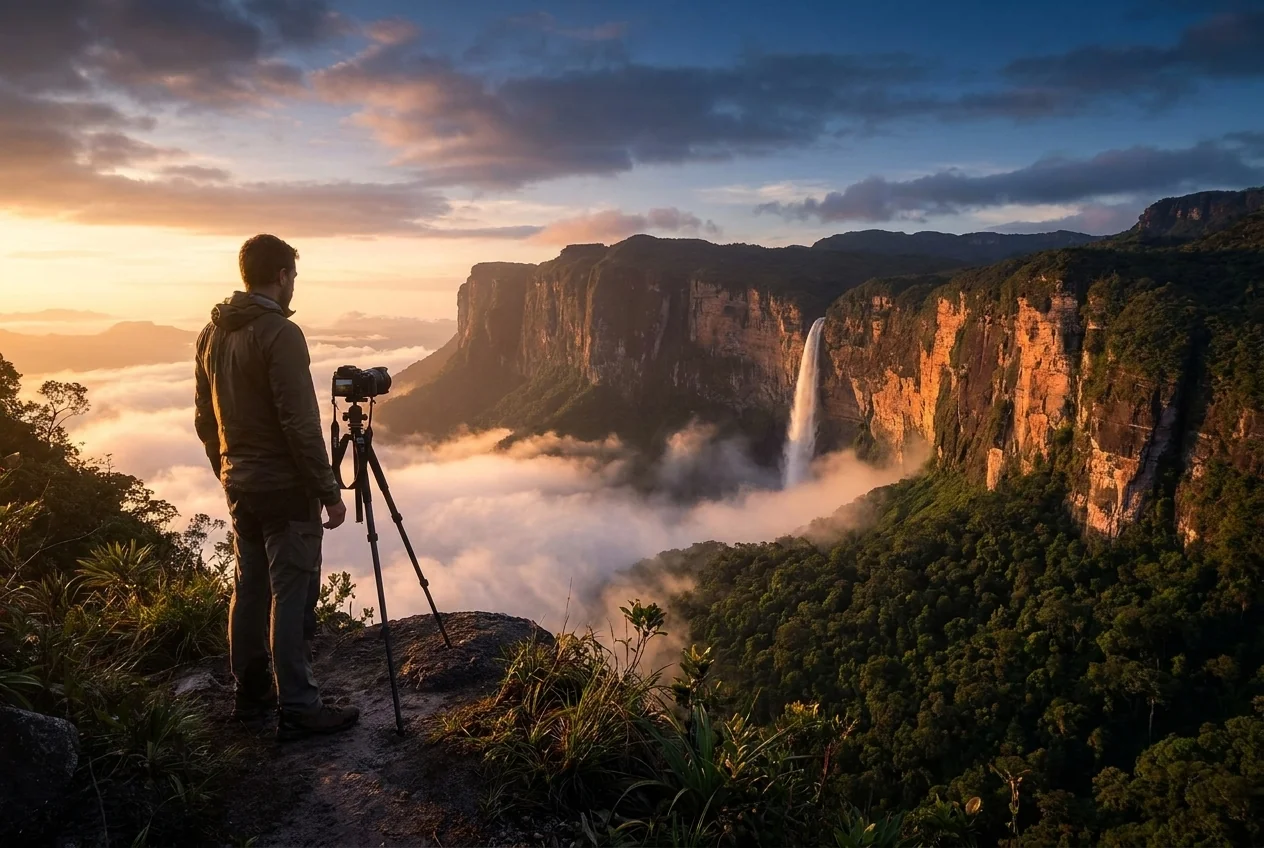
Photographing the world's highest waterfall presents unique challenges that no amount of camera gear can fully solve. The constant mist, unpredictable weather, and sheer scale of Kerepakupai Merú demand adaptation, patience, and creative problem-solving. This guide covers the technical and practical aspects of photographing Angel Falls: from gear selection and protection to composition strategies and the reality of shooting in tropical humidity. Whether you're carrying a professional DSLR or just a smartphone, these insights will help you bring home images that capture the falls' power and majesty.
The Challenge: Mist, Scale, and Humidity
Angel Falls plunges 979 meters from the rim of Auyán-tepui, a vertical drop so immense that much of the water atomizes into mist before reaching the bottom. This creates stunning visual effects but also presents photography challenges:
Constant moisture: Mist drifts across the viewing areas, coating equipment and obscuring clear views. Even on "dry" days, humidity hovers around 80-90%.
Scale distortion: Photos often fail to convey the falls' height. Without reference points, the image can look like any waterfall.
Limited light: The falls face southeast, meaning the sun illuminates them directly only in early morning. By afternoon, the cliff face is in shadow.
Best Times for Photography
Time of Day
Golden hour (6:00-7:30 AM): The sun lights the falls directly, creating warm tones and dramatic contrast. This is your best window for classic shots. You'll need to be in position before sunrise.
Mid-morning (8:00-10:00 AM): Still good light, but the sun moves higher and the magic fades. Useful for documentary shots and wide-angles of the surrounding landscape.
Afternoon: The cliff face falls into shadow, creating flat light on the falls themselves. However, this can be good for shooting the mist against a dark background, and for capturing the surrounding rainforest in soft light.
Overcast days: Diffused light can actually be excellent for waterfall photography, eliminating harsh shadows and allowing longer exposures for silky water effects.
Seasonal Considerations
Wet season (June-November): Maximum water volume creates the most impressive falls. However, clouds often obscure the top of the tepui. You might wait hours for a clear view, or not get one at all. Mist and rain are constant.
Dry season (December-April): Clearer skies and less mist, but significantly reduced water volume. The falls can appear as thin streams, less dramatic than the iconic images. Trade-off: you'll actually see what you're photographing.
The sweet spot is late wet season (September-November): still substantial water, but less chance of complete cloud cover.
Recommended Gear
Cameras
Any modern camera works: DSLRs, mirrorless, high-end compacts, and even smartphones can capture stunning images. The limiting factor isn't megapixels. It's moisture protection and your composition skills.
Weather sealing matters: If your camera has weather sealing, this is the place to test it. If not, you'll need to be extra vigilant about protection.
Lenses
Wide-angle (16-35mm): Essential for capturing the falls in their landscape context. Helps convey scale when including foreground elements.
Standard zoom (24-70mm): Versatile for various compositions from different viewpoints.
Telephoto (70-200mm or longer): Useful for isolating sections of the falls or compressing the perspective to emphasize height. Also good for wildlife.
Bring backup: Lens fogging is inevitable. Having a second lens to swap to while the first dries gives you more shooting time.
Protection
Rain covers: Even if it's not raining, you need rain covers for your camera and lenses. The mist is relentless.
Dry bags: A dry bag for your camera bag is non-negotiable. You'll be in canoes, crossing rivers, and navigating wet trails.
Lens cloths: Bring 10 or more microfiber lens cloths. They'll get wet and need to be rotated constantly.
Silica gel: Pack silica gel packets in your camera bag to absorb moisture overnight.
Power
Extra batteries: There's no electricity at jungle camps. Bring at least 3-4 fully charged camera batteries.
Power bank: A high-capacity power bank (20,000+ mAh) for phones and USB-charged devices.
Solar charger: Compact solar panels can provide emergency power, though jungle canopy and clouds limit their effectiveness.
Key Viewpoints
Laime Overlook (Mirador Laime)
The classic viewpoint, reached by a 1-hour hike from Ratoncito camp. Offers a clear, unobstructed view of the entire falls from a distance. Best in early morning light. Most iconic photos come from here.
Base Pool Area
You'll be directly at the base, looking up at the cascading water. Incredibly powerful but difficult to photograph due to constant spray. Wide-angle essential. Waterproof your camera or expect damage.
River Approach
The journey up the Churún River offers dramatic views of Auyán-tepui's walls. The falls appear in the distance before you reach them. These "reveal" shots can be powerful.
Aerial (Helicopter/Flight)
Scenic flights offer perspectives impossible from the ground: looking down at the falls from above the tepui rim. Shoot through open doors if possible; window reflections can ruin shots. Fast shutter speeds (1/1000+) compensate for vibration.
Composition Strategies
Include Scale References
The falls' height is hard to convey in a photo. Include people, canoes, trees, or birds to provide scale. A tiny human figure against the towering cliff immediately communicates the immensity.
Capture the Mist
Don't fight the mist. Embrace it. The ethereal quality of water atomizing in mid-air is unique to Angel Falls. Backlight the mist for a glowing effect.
Go Vertical
Vertical framing often works better than horizontal for the falls themselves, emphasizing the plunge. Use horizontal for context shots including the tepui and surrounding forest.
Shoot the Journey
Some of your best images may not be the falls themselves, but the approach: the jungle river, the curaca canoes, the Pemón guides, the tepuis emerging from mist. Tell the whole story.
Smartphone Photography
Modern smartphones can capture excellent images at Angel Falls with some precautions:
Waterproof case: Essential. Don't trust "water-resistant" ratings in this environment.
Wide-angle mode: Most smartphones have excellent wide-angle cameras perfect for landscape shots.
HDR mode: Helps with high-contrast scenes where the bright sky meets dark cliffs.
Shoot video: Smartphones often capture video better than stills. The motion and sound of the falls translates powerfully to video.
Clean the lens: Moisture beads on the lens constantly. Wipe before every shot.
Post-Processing Tips
Dehaze: Most editing software has a dehaze tool that cuts through atmospheric mist and boosts clarity.
Don't over-saturate: The natural colors are already vivid. Heavy saturation looks artificial.
Crop for impact: If the composition didn't work in-camera, aggressive cropping can salvage shots.
Embrace imperfection: Some mist, some rain on the lens, some soft focus. These imperfections convey the experience more authentically than a "perfect" image.