Can You Swim at Angel Falls? Pools and Swimming Spots in Canaima
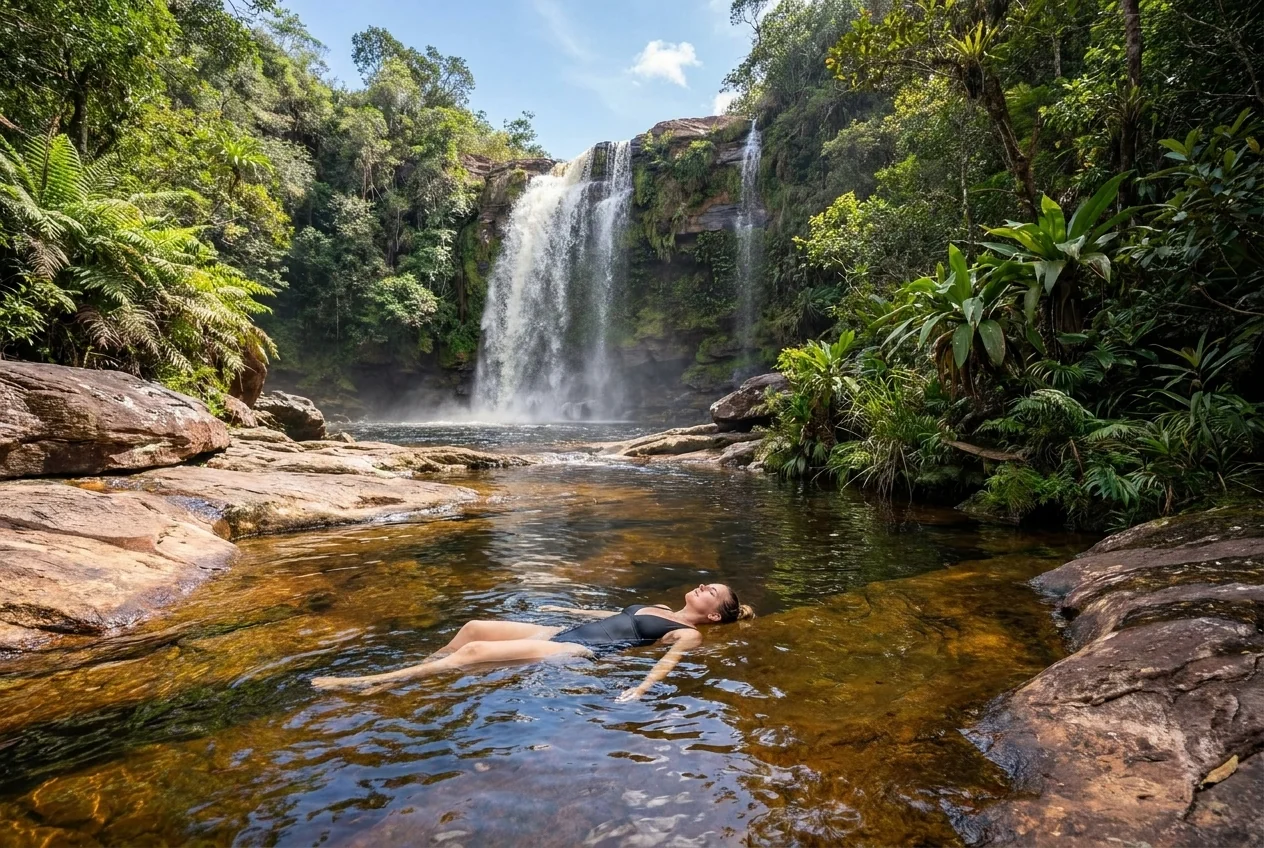
One of the most common questions travelers ask is whether they can actually swim at Angel Falls, and the answer is a satisfying yes, with a few important caveats. You cannot swim in the full plunge of the falls themselves, but there are cold, clear pools at the base you can often wade and swim in, plus the wider swimming that makes Canaima famous: the lagoon ringed by waterfalls and the rivers around the village. This guide covers where you can swim, when it is safe, how cold the water really is, and how to make the most of it without taking a foolish risk.
Swimming at the Base of the Falls
After the 90-minute hike from the river camp to the Mirador Laime viewpoint, many tours give you time to cool off in the pools below Angel Falls. You are not swimming in the direct impact of the 979-meter drop, which is far too powerful and misted, but in the calmer pools and stream sections nearby, fed by the same cold mountain water.
Reaching the pools usually means picking your way over rocks, so steady footing matters. The water is cold, clear, and bracing, and floating there beneath the tallest waterfall on Earth is one of the trip's signature moments. It is entirely optional, and there is no shame in skipping the rock scramble if you are unsure on wet boulders.
Conditions govern everything. In high water the currents can be strong and the guides may limit or prohibit swimming; in lower water the pools are gentler. Always follow your Pemon guide's call on where and whether to get in. They know the river's moods better than any visitor could.
Canaima Lagoon: The Classic Swim
Back at the village, the Canaima Lagoon is the swimming spot most visitors remember. This wide, tannin-stained lagoon sits right beside the village, ringed by a row of waterfalls that pour into it, with pink-tinged sandy shores that make it look almost designed. On a calm day it is one of the most beautiful places you can swim anywhere.
The water is warm compared with the falls' cold pools, shallow near the shore, and generally calm at the edges, which makes it popular with families and anyone who wants an easy, gorgeous dip. The reddish tint comes from tannins leached from the surrounding vegetation, not pollution; the water is clean.
As always, respect conditions and your guide's guidance. Currents near the waterfalls and deeper channels can be stronger than the placid shoreline suggests, so swim where you are told it is safe and keep an eye on children. Used sensibly, the lagoon is the trip's most relaxing swim.
Why the Water Is Red
The lagoon and rivers around Canaima often run a deep red or tea color. This is entirely natural, caused by tannins from decomposing plant matter in the surrounding jungle, the same process that stains many blackwater rivers across South America. The water is clean and safe to swim in; the color simply gives the place its distinctive, photogenic character.
Salto Sapo: Swimming and Walking Behind a Waterfall
The other unmissable water experience near Canaima is Salto Sapo, one of the rare waterfalls in the world you can walk behind. A path leads along the rock face directly behind the curtain of falling water, so you pass between the cliff and the cascade, drenched and deafened, in a thrilling few minutes.
There are calm sections and pools around Salto Sapo where swimming is possible, and the whole excursion is usually sold as a short add-on from the village. Bring footwear with grip because the rock behind the falls is wet and slick, and secure or waterproof anything you do not want soaked, because you will be.
Salto Sapo pairs naturally with the lagoon for a half-day of water activities, and it is accessible to most visitors, including those who skip the longer falls expedition. It is proof that some of Canaima's best swimming and waterfall moments sit within easy reach of the village.
How Cold Is the Water
Temperature varies by spot. The pools at the base of Angel Falls are genuinely cold, fed by water that has fallen from the summit of Auyan-tepui, and the first plunge can take your breath away. That cold is part of the appeal after a hot, sweaty hike, but it is not a warm bath.
The Canaima Lagoon, by contrast, is warmer and more forgiving, sitting in the open and fed by slower rivers. It is the easiest and most comfortable place to spend real time in the water. Salto Sapo's pools fall somewhere in between.
None of the swimming is dangerously cold for a healthy adult, but the contrast surprises people. If you feel the chill quickly, the falls' pools are a quick invigorating dip rather than a long soak, while the lagoon is where you can float and linger. Plan your swims accordingly and you will enjoy both.
Safety Rules for Swimming in Canaima
Wild water in a remote place demands respect. The single most important rule is to swim only where and when your Pemon guide says it is safe. Currents near waterfalls, sudden depth changes, and rising water after rain can all turn a calm-looking spot hazardous, and your guide reads these signs far better than you can.
Never swim toward the direct base of a powerful waterfall, avoid horseplay near currents, and keep close watch on children at all times. Because medical help is hours away, a swimming accident here is far more serious than at a supervised beach. Caution is not timidity; it is basic sense in the wilderness.
Check the conditions of your own body too. Cold water, exertion, and heat can combine in unexpected ways. Enter gradually, do not swim beyond your ability, and get out if you feel cold or tired. Treated with respect, Canaima's waters are one of the great pleasures of the trip.
What to Bring for Swimming
Pack a swimsuit you can wear under your clothes, quick-dry fabric, and footwear with grip for the rocks around the pools and behind Salto Sapo. A small quick-dry towel and a dry set of clothes at camp make the cold dips far more comfortable. Waterproof your camera if you want photos in the water, because the spray and splashing are relentless.
Fitting Swims Into Your Itinerary
Where swimming happens depends on your schedule. On the classic 3-day falls tour, the swim at the base of Angel Falls comes after the viewpoint hike, while the lagoon and Salto Sapo are usually enjoyed on the arrival afternoon or the final day around the village. Building in time for all three is easy if you plan for it.
If you are short on days or not up for the long expedition, the lagoon and Salto Sapo alone deliver superb swimming and waterfall experiences without the river journey. Many visitors are surprised at how much of Canaima's magic sits within walking distance of the village.
Whatever your plan, mention swimming to your operator so the itinerary allows for it. A little coordination means you are never rushing past a perfect pool to make a flight, and you come home having actually swum beneath and beside the waterfalls, not just photographed them from a boat.
Seasonal Water Levels
Season shapes the swimming. In the rainy months the falls and currents are at full force, which can make some pools too strong to enter safely, so guides may restrict swimming near the falls. In lower water, the pools are gentler and easier to enjoy but the falls themselves are thinner. The lagoon remains swimmable across seasons; only the conditions at its edges change.
What Lives in the Water
A question that quietly worries many swimmers is what shares the water with them. The honest answer is reassuring: the pools and lagoon where you swim in Canaima are generally safe, and guides would not lead visitors in if they were not. The dramatic creatures people imagine are rarely a concern in the specific spots used for swimming.
The blackwater rivers here, stained red by tannins, support fish and other life, but the swimming areas around the lagoon, Salto Sapo, and the falls pools are chosen precisely because they are calm and safe. Your Pemon guides know which spots are used for swimming and which to avoid, and following their direction keeps you well clear of anything to worry about.
The realistic hazards are not wildlife but water itself: cold, current, and slippery rock. Focus your caution there. Enter where your guide approves, watch your footing on wet boulders, and respect the strength of the current near waterfalls, and the swimming in Canaima is a pleasure rather than a risk.
Sensible Precautions
Rinse off after swimming, avoid submerging open wounds in untreated water, and do not swim alone or out of sight of your group. These are the same sensible habits you would follow at any wild swimming spot. Combined with your guide's local knowledge, they keep the experience firmly in the joyful column rather than the risky one.