Camping at Angel Falls: What to Expect at Jungle Camps
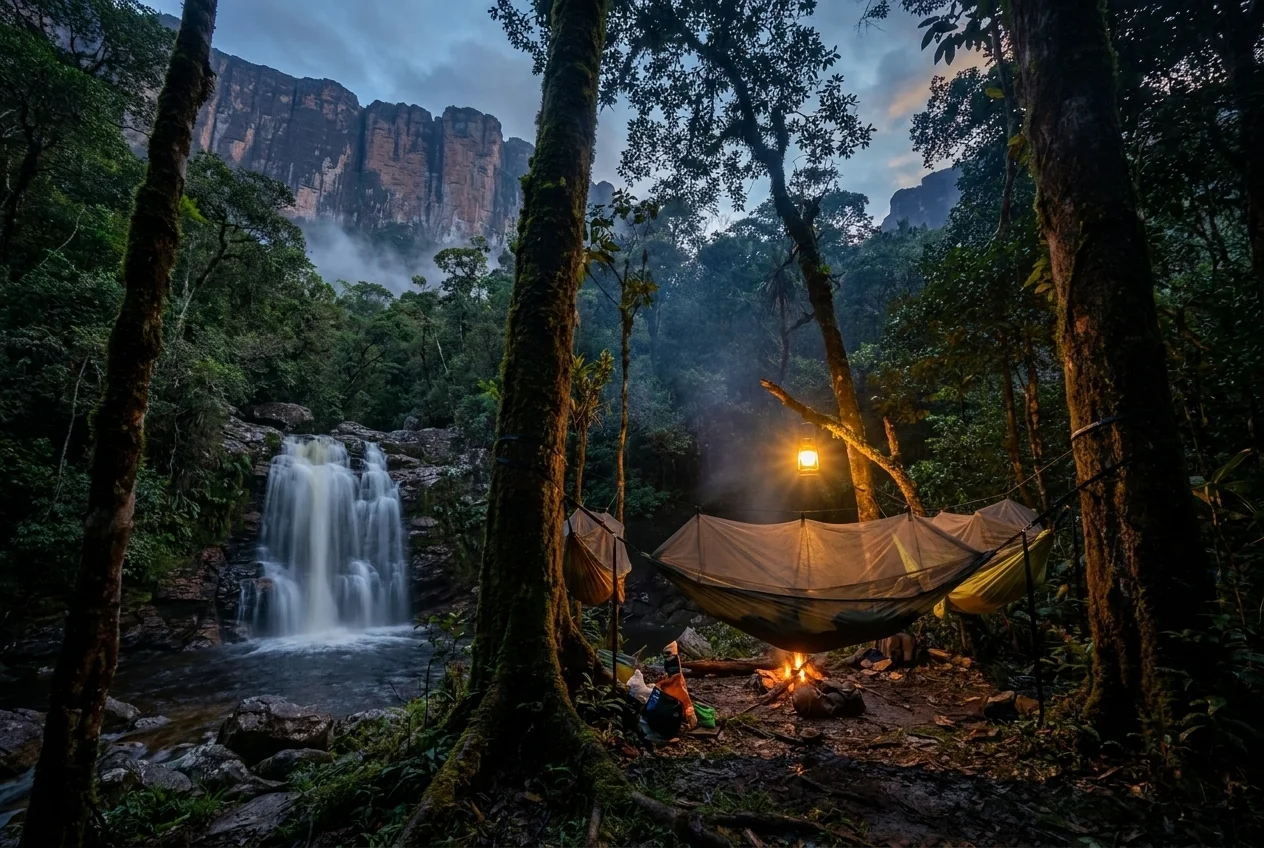
Nobody sleeps in a hotel near Angel Falls. There are no hotels. There is no electricity, no running water, and no phone signal. What you get instead is a thatched-roof shelter with hammocks strung between wooden posts, a kitchen where a Pemon cook turns river fish and plantains into one of the best meals you will eat in Venezuela, and a night sky so clear you can see the Milky Way reflected in the river beside your camp. The jungle camps at Angel Falls are not luxury. They are not even rustic chic. They are genuine wilderness camps, and understanding exactly what that means before you arrive is the difference between a transformative night and a miserable one.
The Main Camps: Where You Will Actually Sleep
There are two primary camps used by tour operators for overnight stays near Angel Falls. The most common is Isla Ratoncito (Little Mouse Island), a small island in the Churun River about 90 minutes downstream from the falls. Most tour groups stop here on the return journey after visiting the falls, using it as a base for the overnight.
Ratoncito has several thatched-roof shelters (churuatas) open on the sides, each holding 6 to 10 hammocks. There is a separate cooking area with a fire pit and basic supplies, a cleared area for gathering, and a latrine set back from the camp. The island is small enough to walk around in 10 minutes.
The second common camp is sometimes called Bernal camp or the upstream camp, located closer to the falls along the Churun River. This camp is used by some operators who prefer their groups to camp near the falls and hike to the mirador early in the morning before other groups arrive. The facilities are similar to Ratoncito but slightly more basic.
A few premium operators have semi-permanent camps with slightly better infrastructure: wooden platforms for hammocks, canvas rain covers, and improved latrines. These cost more but offer a marginal comfort upgrade. Do not expect anything approaching a glamping setup. The difference between a basic camp and a "premium" one is mostly cleanliness and organization.
What a Night at Camp Actually Looks Like
Your evening begins when the curiara pulls up to the camp around 4 or 5 PM, after the hike to the falls and the return river trip. The guide assigns hammocks, and you claim your spot by hanging your bag from a hook or rope. Most travelers change into dry clothes immediately because you will be wet from the river and the falls mist.
The cook starts preparing dinner almost as soon as you arrive. The typical camp meal is fresh fish caught from the river (often pavon, a type of peacock bass), fried plantains, rice, and a salad if fresh vegetables made the trip. The food is cooked over a wood fire and served on plates that get washed in the river. It is simple, but travelers consistently describe camp meals as some of the best food of their entire Venezuela trip.
After dinner, the camp settles into a quiet rhythm. Some guides tell stories about the Pemon legends of Auyantepui, some play music on a small speaker, and some just sit quietly. Without artificial light, your eyes adjust to the darkness within 30 minutes, and the stars become extraordinary. The Milky Way is visible in full detail because there is zero light pollution within 100 kilometers.
The jungle is not quiet at night. Howler monkeys call from across the river (a deep, guttural roar that is alarming if you do not know what it is). Frogs create a constant, layered chorus. Insects hum. Occasionally, something splashes in the river. None of this is dangerous. All of it is loud. Earplugs are the single most useful comfort item you can bring.
The Hammock Question: How to Actually Sleep
If you have never slept in a hammock, the idea sounds romantic. The reality requires technique. A hammock is not a bed, and lying in it like a bed (straight, head to foot) is a guaranteed way to wake up with a sore back and a body shaped like a banana.
The trick is to lie diagonally. Position yourself at roughly a 30-degree angle across the hammock, with your head slightly off-center to one side and your feet to the other. This flattens the fabric and creates a surprisingly comfortable sleeping surface. Many experienced hammock sleepers say they sleep better in a hammock than a mattress once they learn this technique.
Most camps provide hammocks, but the quality varies. Some are cotton (comfortable but slow to dry), some are synthetic (lighter, dries fast, less comfortable). If you own a hammock you love, bring it. The camp hooks and ropes accommodate personal hammocks without any issue.
You need a lightweight blanket or sleeping bag liner. Temperatures at camp drop to 18 to 22 degrees Celsius at night, which does not sound cold until you are lying in an open hammock with damp clothes. The cool air comes from below the hammock as well as above, so a thin sleeping pad or blanket beneath you helps significantly. A mosquito net is provided at most camps, but bringing your own guarantees it does not have holes. Check the packing guide for specific hammock gear recommendations.
Wildlife at Camp: What Shares Your Jungle
The camps sit in one of the most biodiverse regions on the planet, and the wildlife does not take the night off.
Howler monkeys are the most dramatic presence. Troops live in the trees around both main camps, and their dawn chorus (starting around 5 AM) is one of the most primal sounds in nature. The roar carries for 3 kilometers through the jungle. First-time visitors often think a jaguar is attacking the camp. It is not. It is a 7-kilogram monkey with an oversized hyoid bone in its throat.
Toucans and macaws are common around camp in the early morning. The channel-billed toucan, with its absurdly large orange beak, is a regular visitor to the trees above Ratoncito. Blue-and-yellow macaws sometimes fly over in pairs, especially near dawn.
Insects are the practical concern. Mosquitoes are present year-round but worse during rainy season. Blackflies (jejenes) are small, silent, and leave bites that itch for days. They are most active at dawn and dusk. Apply repellent before those hours. Fire ants are on the ground around some camps. Shake out your shoes before putting them on in the morning.
Snakes exist in the area but are extremely rarely seen at camp. The Pemon guides keep camps clear of brush specifically to reduce encounters. In decades of tourism operations, snake incidents at the main camps are essentially unheard of. Tarantulas occasionally appear on the camp periphery and are completely harmless despite their appearance.
How to Mentally Prepare If You Have Never Camped
If your overnight experience maxes out at a Holiday Inn, the jungle camps will challenge you. But the challenge is almost entirely mental, not physical. The camps are safe. The food is good. The hammocks, once you figure out the diagonal technique, are comfortable. The real hurdle is accepting a level of discomfort that modern travelers rarely encounter.
Here is what helps. First, reframe the experience. You are not roughing it as a concession to logistics. The camp is the experience. Sleeping beside the river, hearing the jungle, watching the sunrise over the tepuis from your hammock, this is the part of the trip you will talk about for years.
Second, lower your hygiene expectations for 24 hours. There is no shower. You wash in the river (which is clean and warm). The latrine is a wooden seat over a hole. This is temporary, and it is how the Pemon guides live during every expedition they run.
Third, bring the small comforts that make a big difference. Earplugs for sleeping. A headlamp with a red-light mode so you can navigate at night without blinding everyone. Wet wipes for a cleanup before bed. A small flask of something to share with your group after dinner. A portable charger for your phone if you want to use it as a camera the next morning (there is nowhere to plug in).
Fourth, talk to your guide. Pemon guides have hosted thousands of visitors at these camps. They know the anxieties. They will point out the howler monkeys, show you which stars are which, and make sure you are comfortable. The guides genuinely want you to enjoy the night because a positive experience means more travelers coming to support their community.
Key Takeaway
The jungle camps at Angel Falls strip away every modern convenience and replace them with something better: direct, unmediated contact with one of the wildest landscapes on Earth. The hammock, the fire-cooked fish, the howler monkey dawn chorus, the Milky Way, these are not hardships. They are the reason you came. Pack smart, sleep diagonal, bring earplugs, and lean into the experience. You will not regret it.