Jimmy Angel: The Pilot Who Landed on the World's Tallest Waterfall
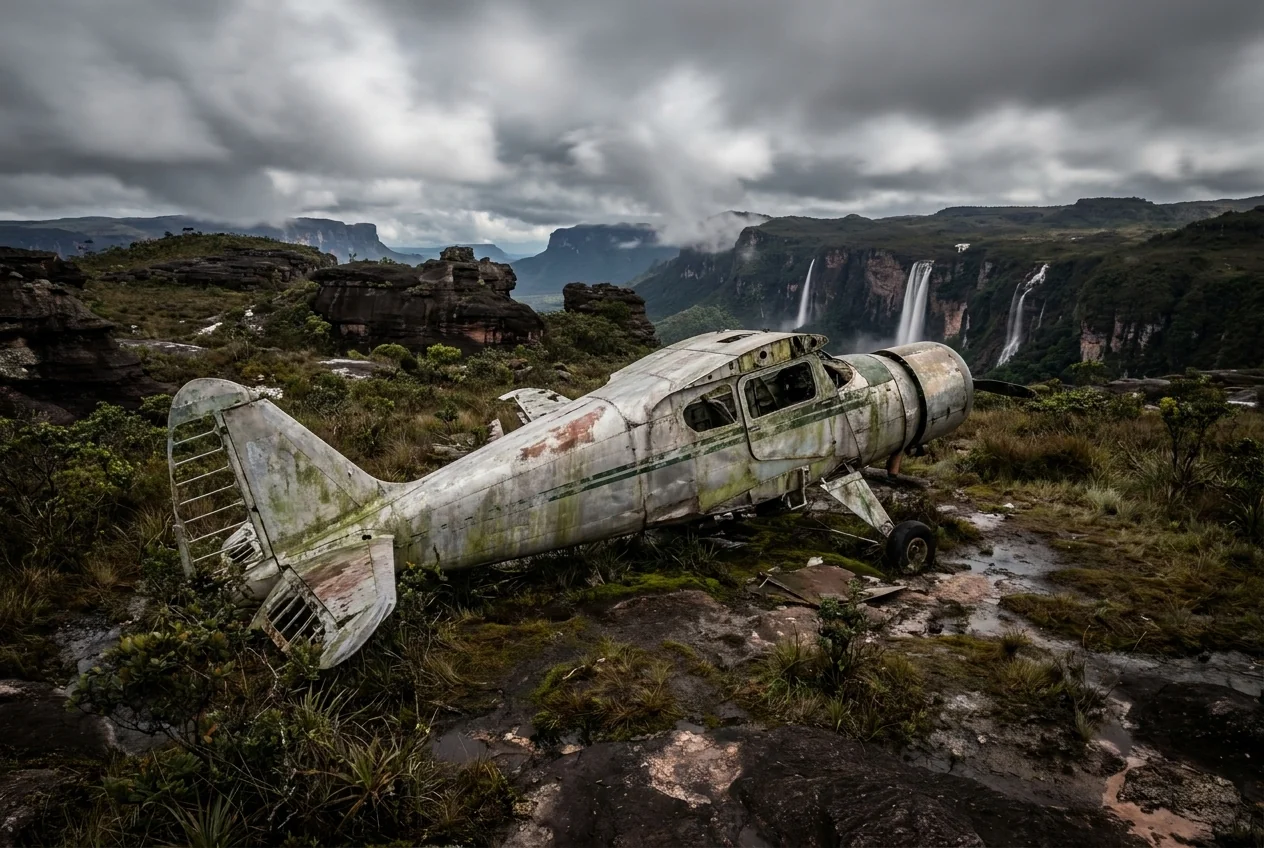
The tallest waterfall on Earth is named after a man who got his plane stuck on top of a mountain and had to walk down. Jimmie Angel, an American bush pilot, did not discover Angel Falls, the Pemon had known it for generations, but his dramatic flights over the Venezuelan highlands in the 1930s, and one spectacularly ill-fated landing in 1937, fixed his name to the falls forever. His story is part adventure, part misadventure, and a useful reminder that the modern name of this place is only the most recent chapter in a much older history.
A Bush Pilot in Search of Gold
Jimmie Angel, sometimes written Jimmy Angel, was an American aviator of the barnstorming era, a bush pilot who flew for hire across remote and difficult country. Like many adventurers of his time, he was drawn to Venezuela's Guiana Highlands by rumors of gold and riches hidden in the tepui country, the vast flat-topped mountains that rise from the jungle and savanna.
Flying small aircraft over this region in the early 1930s, Angel was searching by air for valuable ore beds when he passed over an astonishing sight: an immense waterfall pouring from the flank of a huge tepui, later identified as Auyan-tepui. He first flew over the falls in the early 1930s, and the encounter left a deep impression.
The search for gold that brought Angel to Venezuela never made him rich, but the falls he sighted from the cockpit would make his name. It is a fitting origin for a place this improbable: a treasure hunter who found not gold but the tallest waterfall on the planet.
The 1937 Landing on Auyan-tepui
In October 1937, Angel returned to the falls with the intention of landing on the summit of Auyan-tepui. Aboard his small monoplane, often recorded as being named El Rio Caroni, were his wife Marie and two companions, Gustavo Heny and Miguel Delgado. Setting a plane down on the boggy, uneven top of a tepui was a bold and risky undertaking.
The landing did not go as hoped. The aircraft touched down but became mired in the soft, marshy ground of the summit, its wheels sinking so that taking off again was impossible. The plane was stuck fast on top of one of the most remote and inaccessible places imaginable, thousands of feet above the surrounding jungle.
Angel and his companions were unhurt, but they now faced a serious problem: they were stranded on the summit of a tepui with no way to fly out. The adventure had turned, in an instant, from a daring flight into a survival ordeal on the roof of the Venezuelan highlands.
The Long Walk Down
With the plane hopelessly stuck, the group had no choice but to descend on foot. Getting off a tepui is not a simple hike; the summits are ringed by cliffs and cut by canyons, and the terrain between the top and the nearest settlement is rugged and unforgiving. Accounts describe a difficult trek of many days, often given as around eleven, to reach help.
They made their way down the mountain and through the wilderness toward the Pemon settlement of Kamarata, low on supplies and navigating some of the most challenging country in South America. That they came through it at all is a testament to grit and, no doubt, to the knowledge of the region's terrain.
When word of the exploit spread, it captured imaginations far beyond Venezuela. The image of a pilot marooning his plane atop a lost-world mountain and walking out was irresistible, and it drove a surge of interest in the falls and the tepui country that Angel had flown over.
How the Falls Got His Name
In the wake of Angel's flights and the famous stranded-plane story, the falls became associated with his name in the wider world. As surveyors and mapmakers took greater interest in the region, the name Angel Falls came into use, and it appeared on Venezuelan government maps issued in the years that followed, commonly dated to 1939.
This is the crucial nuance of the story. Jimmie Angel did not discover the falls; he brought them to international attention and lent them the English name by which the world now knows them. The falls were long known to the Pemon people, whose name for them is usually given as Kerepakupai Vena.
So the modern name records a real and dramatic piece of twentieth-century history while sitting atop a far older indigenous relationship with the place. Both truths belong together: the aviator who put the falls on the world's maps, and the people who knew them long before any map was drawn.
Fact, Legend, and What to Believe
Like many tales from the barnstorming age, the Jimmie Angel story has attracted embellishment over the decades. The core facts are well established: he flew over the falls in the 1930s, attempted a summit landing in 1937 that left his plane stuck, descended on foot over many days, and gave the falls their English name. Beyond that skeleton, details vary between tellings.
Some accounts add colorful specifics, dates, dialogue, and dramatic flourishes, that are harder to verify. It is worth enjoying the legend while keeping a little skepticism about the more elaborate claims, because the record has been polished and reshaped in the retelling.
The plane itself became part of the legend. It reportedly sat on the summit of Auyan-tepui for decades before being recovered, a rusting monument to the landing that named a waterfall. Whatever the finer details, the essential story endures because it is remarkable: a stranded aircraft on a lost-world mountain, and a name that stuck.
Why the Story Still Matters to Visitors
Knowing Jimmie Angel's story changes how you see the falls when you finally stand before them. You are looking at the same immense cliff of Auyan-tepui that Angel flew along, the same summit where his plane sank into the bog, the same wilderness he walked to escape. The history adds a human dimension to a natural wonder.
It also frames the falls honestly. Carrying both the aviator's tale and the Pemon name Kerepakupai Vena in mind lets you appreciate the full arc of the place, from ancient indigenous knowledge to twentieth-century adventure to the guided trips of today. The falls have meant different things to different people across time.
For a modern traveler, that layered story is part of the reward. You are not just ticking off the tallest waterfall on Earth; you are stepping into a landscape shaped by geology, indigenous stewardship, and one pilot's audacious, unlucky landing. Understanding how the falls got their name makes the journey to see them richer.
The Legacy of One Reckless Landing
Jimmie Angel's stranded plane did more than make a good story; it helped open the Gran Sabana to the outside world. The publicity around the marooned aircraft and the walk to safety drew explorers, scientists, and surveyors to a region that had been little known beyond its indigenous inhabitants, accelerating the mapping and study of the tepui country in the years that followed.
That surge of interest is a double-edged legacy. It put Angel Falls and Canaima on the world's map and, eventually, made the tourism that now brings visitors, and income to Pemon communities, possible. But it also began the long process of outsiders defining and naming a landscape that already had names, stories, and stewards.
Angel himself never profited greatly from the fame attached to his name. He remained a working pilot and adventurer, and the falls that carry his name outlived and outshone him entirely. The lasting monument to that reckless 1937 landing is not the man but the place, the tallest waterfall on Earth, forever tied to a treasure hunter who found something far more enduring than gold.
Key Takeaway
Jimmie Angel gave the world's tallest waterfall its English name not by discovering it, the Pemon knew Kerepakupai Vena long before him, but through his 1930s flights and a 1937 landing that left his plane stranded on Auyan-tepui and forced an eleven-day walk to safety. Carry both stories with you: the daring, unlucky aviator and the far older indigenous relationship with the falls. Knowing the history turns a spectacular view into a place with depth, and makes the journey to see Angel Falls all the more meaningful.