Kavac Cave and Canyon: Canaima Other Great Day Trip
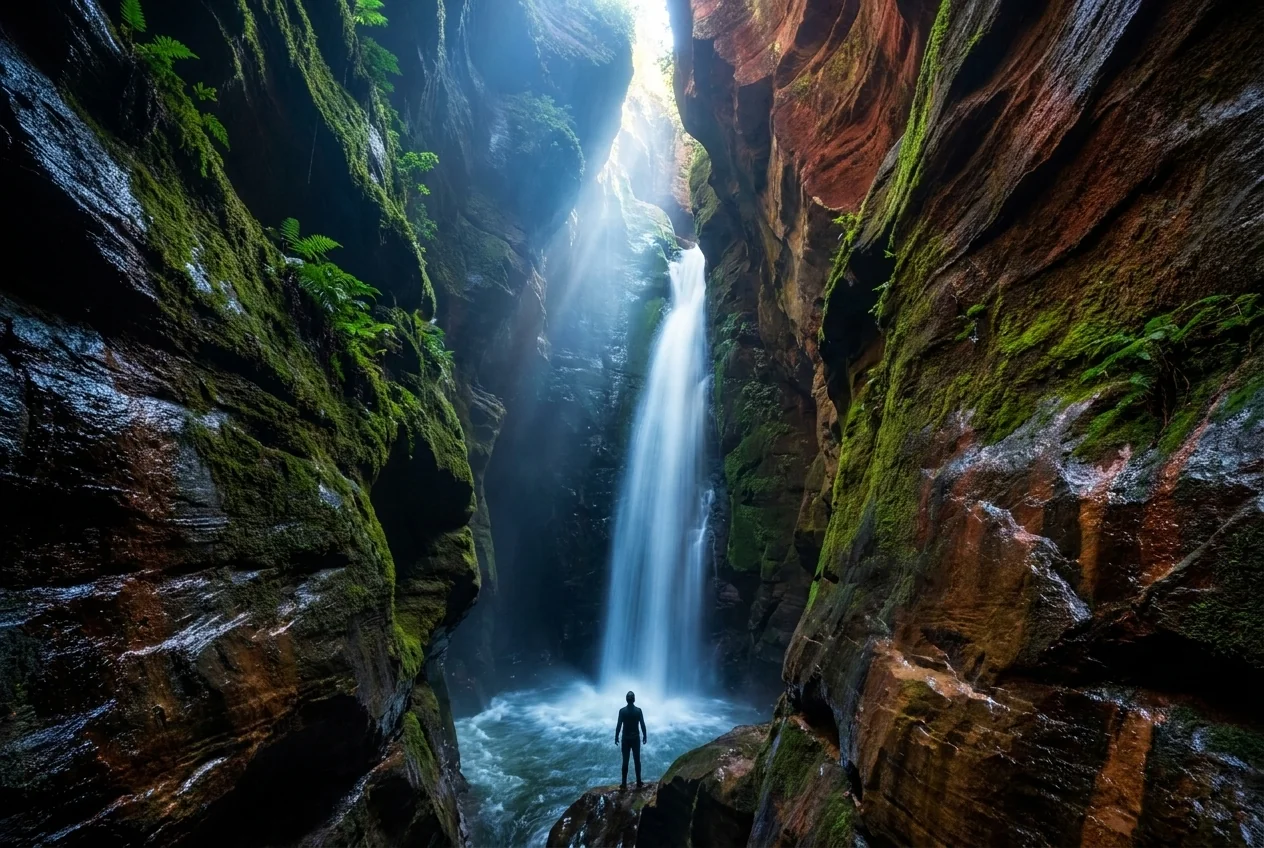
Most visitors to Angel Falls never hear of Kavac, and those who do often remember it as the surprise highlight of their trip. Tucked at the foot of Auyan-tepui, the same mountain that Angel Falls pours from, Kavac is a small Pemon village and a spectacular canyon where you wade and swim up a narrowing gorge to a hidden waterfall crashing down a slot in the rock. It is a completely different water experience from the falls themselves, more intimate and hands-on. This guide covers what Kavac is, how to reach it, how demanding it is, and how to fit it into a Canaima trip.
What Kavac Is
Kavac is a Pemon community set on the savanna at the base of Auyan-tepui, home to the Kamarakoto people, one of the Pemon subgroups. Its fame rests on the nearby canyon, often called the Cueva de Kavac, or Kavac Cave, a deep gorge carved into the flank of the tepui where a waterfall plunges through a slot in the cliffs into a pool below.
Reaching the waterfall means walking up the streambed and, in the final stretch, wading and swimming through the narrowing canyon against the current, with sheer rock rising on either side. The name cave is a little misleading; it is a slot canyon, so tight and shadowed in places that it feels enclosed, ending at the thundering fall of water at its head.
The setting, on the open savanna beneath the vast dark wall of Auyan-tepui, is unlike anywhere else in the region. Kavac pairs the drama of the tepui landscape with an adventurous, get-in-the-water excursion that few visitors expect.
The Canyon Experience
The excursion into the canyon is short but intense in the best way. From the village you walk across the savanna and enter the gorge, following the stream as the walls close in. The final approach to the waterfall involves wading, and often swimming, up the channel through cold, fast-moving water while the rock towers overhead.
At the head of the canyon, the waterfall pours down through the slot with real force, filling the enclosed space with spray and noise. Standing in the pool beneath it, hemmed in by the cliffs, is a visceral, immersive moment that contrasts sharply with viewing Angel Falls from a distance.
Because you are in the water and the current can be strong, this is a hands-on adventure rather than a gentle walk. It is exhilarating and accessible to reasonably fit visitors who are comfortable swimming, but it is not the right choice for weak or nervous swimmers, especially when water levels are high.
How Wet You Will Get
There is no staying dry at Kavac. You wade and swim through the canyon, so wear a swimsuit under quick-dry clothing, bring footwear that stays on your feet in moving water, and waterproof anything you carry in. A dry bag for your camera and a change of clothes for afterward turn a soaking adventure into a comfortable one.
How to Reach Kavac
Kavac sits in the same corner of Canaima National Park as Angel Falls, near the settlement of Kamarata on the far side of Auyan-tepui, and like everywhere in this roadless region it is reached by small aircraft. Charter flights connect it with Canaima and other regional airstrips, and the short hop over the tepui country is spectacular in its own right.
Because access depends on light planes and local logistics, Kavac is usually visited as part of a tour arranged through your operator rather than on your own. Some itineraries combine Kavac and Kamarata with the classic Angel Falls trip, using flights to link the different parts of the park.
Confirm the specifics with your operator, since routings and available flights change with the season and demand. Treat Kavac as an add-on to plan in advance with the people organizing your trip, not a spontaneous side trip you can arrange on arrival in Canaima.
Combining Kavac With Angel Falls
Kavac works beautifully as an extension to a falls trip, giving you a second, very different water adventure and a closer look at Kamarakoto Pemon life. It usually means extra flights and days, so weigh the added cost and logistics. For travelers who have come all this way, the combination turns a single-highlight trip into a fuller expedition around Auyan-tepui.
Difficulty and Who Should Go
Kavac asks more of you physically than a viewpoint stroll. The canyon involves walking on uneven ground, wading, and swimming against a current in cold water, sometimes with rock scrambling. It is well within reach of reasonably fit adults who are confident in water, but it is demanding for nervous swimmers, small children, or anyone unsteady on slick surfaces.
Water levels change the difficulty significantly. After heavy rain the current in the canyon strengthens and the swim becomes harder and potentially unsafe, so guides may limit how far you go or postpone the visit. In lower water the wade is gentler and more forgiving.
As with everything in Canaima, follow your Pemon guide's judgment on conditions absolutely. They know when the canyon is safe and when it is not. If you are a weak swimmer, tell them plainly, and enjoy the savanna and village setting even if you choose not to press all the way to the waterfall.
When to Visit and What to Expect
Season shapes Kavac as it shapes the whole region. In the rainy months, roughly June to November, the waterfall is at its most powerful and the scenery lush, but the canyon current is stronger and access can be affected by weather. In the drier months the swim is gentler, though the fall carries less water.
The savanna setting means big skies and heat, so sun protection and hydration matter here just as they do on the river. Expect a half-day around the canyon and village rather than a marathon, with time to appreciate the tepui rising above and, on longer visits, to learn a little about Kamarakoto Pemon life.
Kavac remains far quieter than the main Canaima sights, part of its charm. Go with an open mind and modest expectations about facilities, since this is a small remote community, and you may well come away rating it among the most memorable parts of your whole Venezuela trip.
Respecting the Community
Kavac is a living Pemon village, not a resort. Travel with the local guides who make the canyon visit possible, ask before photographing people, buy local crafts to support the community, and follow their lead on where you may go. Your respect and fair payment help keep community tourism a real benefit to the people who host you.
Kamarata and the Wider Area
Kavac rarely stands alone. It sits near Kamarata, a larger Pemon settlement in a broad valley beneath Auyan-tepui, and the two are often visited together as part of a deeper exploration of this side of the park. Kamarata is a hub for the Pemon communities of the region and a launch point for more ambitious expeditions, including treks and river journeys around the mountain.
Spending time in the area rewards travelers who want more than a single highlight. The savanna landscapes, the immense presence of Auyan-tepui, and the chance to see everyday Pemon life away from the busier Canaima village give a fuller picture of the world Angel Falls belongs to. It is quieter, more remote, and more textured than a quick tick-box visit.
Because infrastructure is minimal, this deeper exploration relies entirely on local guides and charter flights, and it suits travelers with time, flexibility, and an appetite for genuine remoteness. If that is you, ask your operator about combining Kavac and Kamarata into an itinerary that goes beyond the standard falls trip.
Adventures for Those With More Time
From this side of Auyan-tepui, more demanding options open up for experienced, well-prepared adventurers, from long treks to multi-day expeditions arranged with local guides. These are not casual add-ons and require real planning, fitness, and the right operator. But for travelers who want the tepui world at its wildest, the area around Kamarata is where the deeper journeys begin.