What You Will Eat on an Angel Falls Tour: Camp Food and Local Dishes
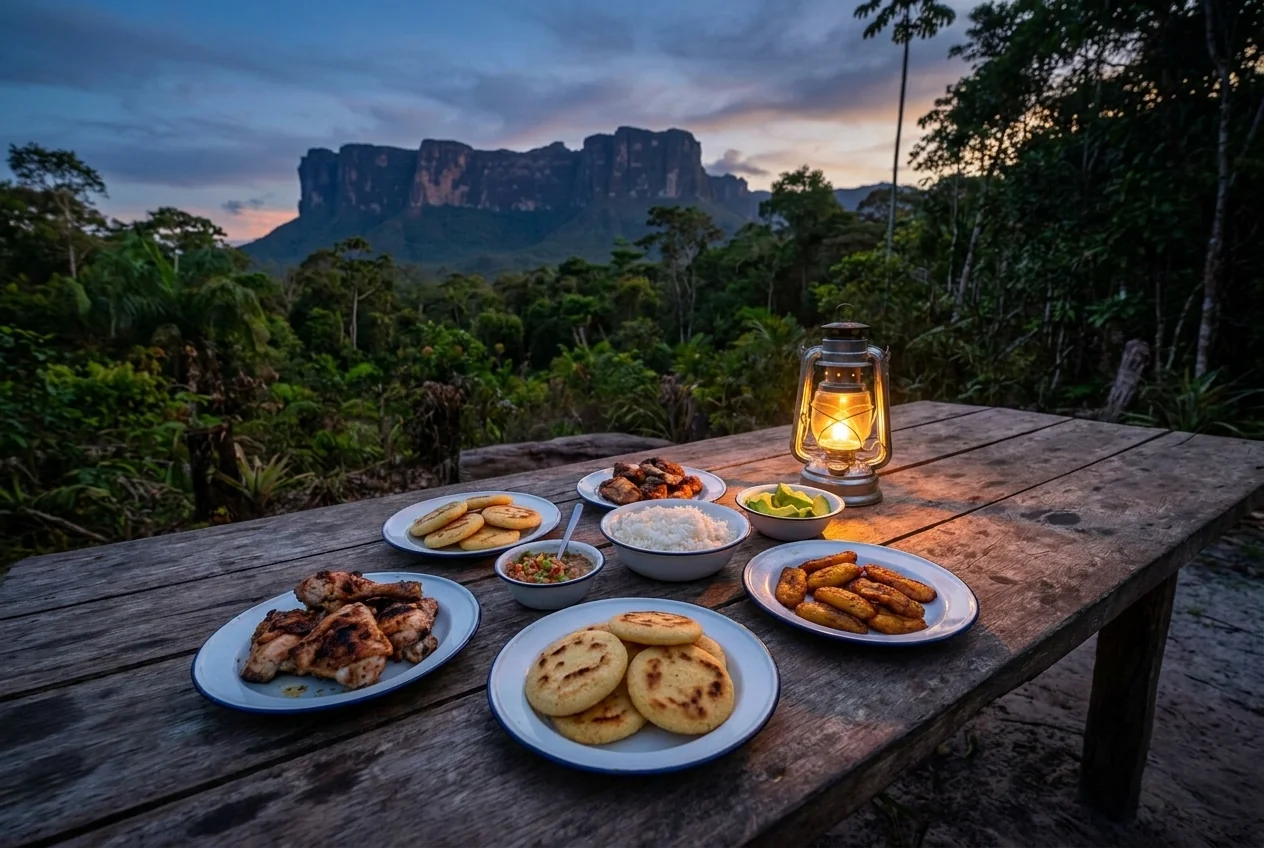
Food is rarely the reason people travel to Angel Falls, but it shapes the experience more than most travelers expect. You will spend days in a place with no restaurants and no supermarket, eating what your guides cook over a camp stove and what your posada serves. The meals are simple, hearty, and better than the remoteness suggests, built around Venezuelan staples that have fed the region for generations. This guide walks through exactly what you will eat, how safe the food and water are, how to handle dietary needs, and what to pack so hunger never spoils a day on the river.
Camp Meals on the River Trip
During the expedition to the falls, all your meals are cooked by your guide's team at the jungle camp, and they are more satisfying than their simplicity implies. Expect grilled or stewed chicken and fresh river fish, served with rice, plantain, and cassava bread, plus fruit and strong coffee. After a long day on the water and the trail, this food tastes remarkable.
Breakfast is usually simple and filling: arepas, eggs, bread, fruit, and coffee to fuel the morning hike. Lunch is often eaten on the move, at a stop along the river, and can be a packed meal or a quick cook-up. Dinner is the main event, prepared at camp as the light fades.
There is no menu and no choice of dishes; you eat what the team prepares, and portions are generous. The cooking happens in a basic camp kitchen over gas or fire, so meals are wholesome and straightforward rather than refined. It is exactly the kind of food that keeps you going in the jungle.
Venezuelan Staples to Know
A few dishes appear again and again, and knowing them makes the food more enjoyable. The arepa, a round cornmeal cake that is grilled or fried and split to hold fillings, is the national staple and turns up at almost every meal. Cassava bread, a flat, crisp round made from yuca, is another constant, especially in this region.
You will also meet the cachapa, a sweet corn pancake often served with cheese, and pabellon criollo, the classic Venezuelan plate of shredded beef, black beans, rice, and fried plantain, when you eat in towns. Fresh tropical fruit and juices are everywhere and are a highlight.
In Pemon communities and around Canaima, the food leans toward what the rivers and land provide: fish, chicken, plantain, cassava, and rice. It is unpretentious, filling, and rooted in place. Trying these staples is a small but real way to connect with the culture that hosts you.
Eating in Towns Along the Way
In Ciudad Bolivar and other stops, you have more variety and can sit down to a proper Venezuelan meal: arepas stuffed to order, grilled meats, empanadas, and full plates like pabellon criollo. Prices are low by international standards and paying in US cash is straightforward. Use these town meals to eat well and stock up before the simpler fare of the jungle.
Water Safety and Staying Hydrated
Water is the part of eating and drinking that matters most for your health. Drink only bottled or properly treated water throughout the trip, and use it for brushing your teeth too. Do not drink untreated river or tap water, however clean it looks, because unfamiliar microbes are a common cause of travelers falling ill.
Staying hydrated is a genuine challenge in the heat and humidity, and dehydration is one of the most frequent reasons visitors feel unwell. Carry a reusable bottle you can refill from trusted bottled sources, drink more than feels necessary, and consider electrolyte sachets to replace what you lose sweating on the river.
Your guides and posadas will point you to safe water, and tours generally provide bottled or treated water at camp. Confirm this when you book so you know whether to carry extra. Getting your fluids right does more for your comfort and energy than almost anything else on the trip.
Avoiding Stomach Trouble
Beyond water, simple habits reduce the risk of an upset stomach: wash or sanitize your hands before eating, be cautious with raw salads and unpeeled fruit you did not peel yourself, and eat food that is freshly cooked and hot. Camp meals prepared over the fire are generally a safe bet. A small kit of rehydration salts and basic stomach medicine is worth packing just in case.
Dietary Needs and Restrictions
This is a place where planning ahead really matters. Vegetarian meals are possible but limited, and vegan, gluten-free, or allergy-specific diets are harder to accommodate in a remote camp kitchen with a fixed menu. The golden rule is to tell your operator your needs when you book, clearly and in advance, not on arrival.
Given enough notice, guides can usually prepare vegetarian versions built around rice, plantain, cassava, beans, eggs, and vegetables, and posadas can do the same. But last-minute requests in a place with no supermarket are hard to meet, so communication is everything.
If you have serious allergies or strict dietary requirements, plan to supplement your own meals. Bring a supply of foods you can rely on so you are never dependent on a single camp meal working out. A little self-sufficiency turns a potential problem into a non-issue.
Communicating in Advance
Put your dietary needs in writing when you book and confirm them again with your guide before the river trip, ideally in Spanish or with your operator translating. Do not assume a verbal mention at the airport will reach the person cooking. Clear, early, written communication is what actually gets you the meals you need in the jungle.
Snacks and Extras to Pack
Bringing your own snacks is one of the smartest small moves you can make. The village shop stocks only basics, so carry energy bars, nuts, dried fruit, and any comfort foods from Ciudad Bolivar or home. They cover the gaps between meals, fuel the hike, and are a genuine morale boost on a tough day.
Electrolyte sachets and rehydration salts earn their place for the reasons above, and a small stash of your favorite instant coffee or tea can make a cold morning at camp feel civilized. If you have specific tastes or a big appetite, plan to top up what the tour provides rather than relying on it entirely.
Pack snacks in sealed, waterproof bags so they survive the splashing canoe, and be tidy with wrappers in a place this pristine, carrying out everything you bring in. A well-chosen snack bag is light insurance against hunger, low energy, and the occasional meal that is not quite enough after a big day.
Respecting the Environment
Canaima is a UNESCO World Heritage Site and a fragile wilderness. Carry out all your packaging and food waste rather than leaving it at camp or on the trail, and never feed wildlife with your snacks. Keeping the rivers and jungle clean is part of traveling here responsibly, and it protects the place for the Pemon communities who call it home.
Coffee, Drinks, and Local Flavors
Beyond the plates, a few drinks and flavors define eating in this part of Venezuela. Coffee is strong, sweet, and everywhere, often served small and dark, and a good cup at camp as the mist lifts off the river is a small daily ritual worth savoring. Fresh fruit juices, made from tropical fruit you may not recognize, are a genuine highlight and a safe pleasure when made with treated water.
Alcohol is not a big part of a jungle expedition, and you should not count on it at remote camps, though towns and posadas have beer and spirits. Do not rely on alcohol to unwind after a hard day; the heat and exertion make hydration the priority, and drinking heavily in a remote place hours from help is unwise.
The overall flavor of the region's food is unfussy and rooted in what the land and rivers give: corn, cassava, plantain, fish, and fruit, seasoned simply. Approach it with curiosity rather than comparison to home cooking, and the meals become part of the adventure rather than an afterthought.
Trying Fruit You Have Never Seen
Venezuela's tropical fruit is one of the quiet joys of the trip. You may be offered varieties with no English name, eaten fresh or blended into juice. When it is peeled for you or made with treated water, it is a safe and delicious way to taste the place. Say yes when a guide or host offers you something local; it is often a highlight.