Money in Venezuela: Cash, Dollars, and Paying for Your Angel Falls Trip
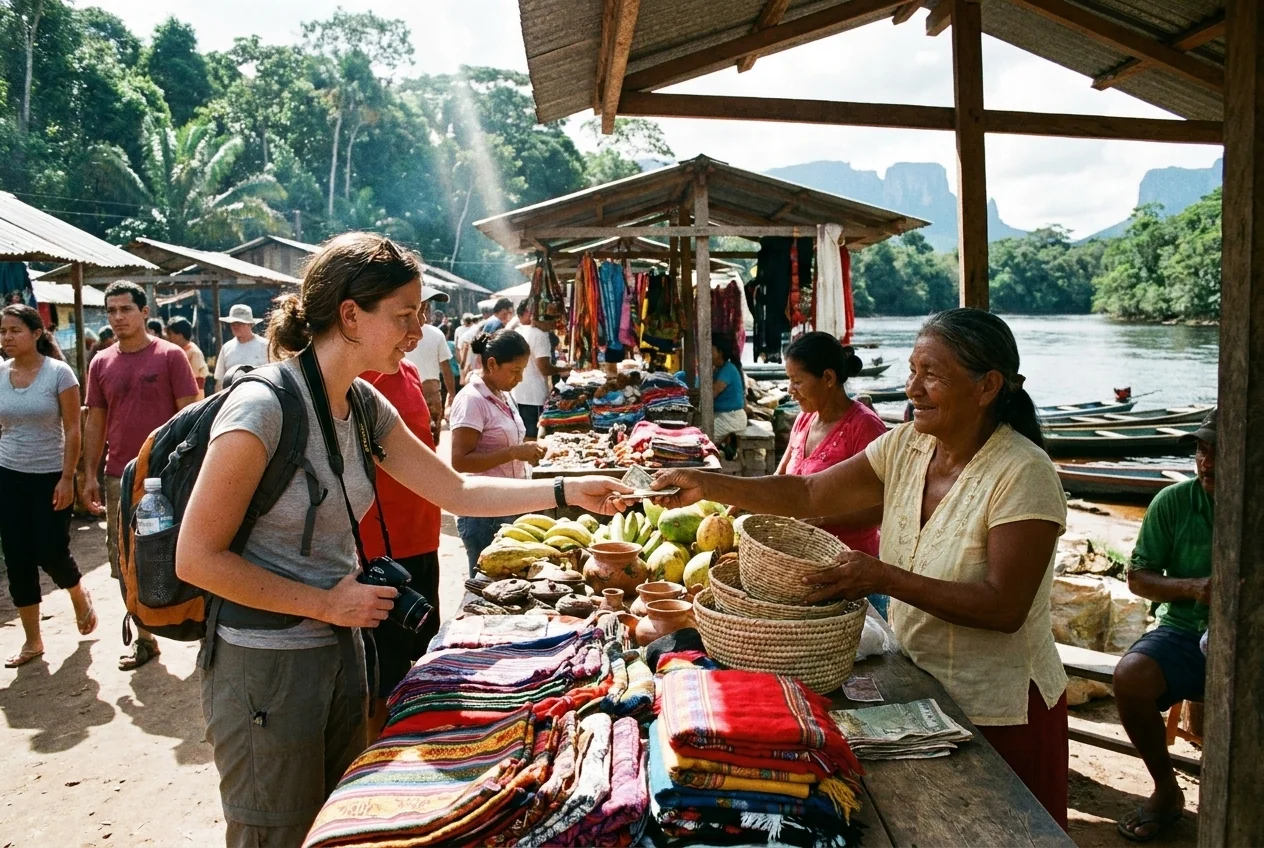
The most important thing to understand about money in Venezuela is that your trip runs on physical US cash. Not cards, not ATMs, not local currency you exchange at the airport. For an Angel Falls trip in particular, you are heading into a region with no working banking infrastructure, so the dollars in your money belt are the dollars you have. This guide explains why the country works this way, exactly how much to bring, how to carry it safely, and the small habits that keep you from getting stuck without a way to pay.
Why Venezuela Runs on US Dollars
Years of high inflation pushed everyday life in Venezuela toward the US dollar. In tourist areas, prices are often quoted in dollars, and vendors, posadas, and guides prefer them. The local currency, the bolivar, still circulates and you will sometimes receive it as change, but you do not need to acquire much of it as a visitor.
This matters most in remote destinations. In Caracas you can sometimes use cards at hotels and larger restaurants, but the moment you head toward Ciudad Bolivar and Canaima, the economy becomes almost entirely cash. Tours, park fees, tips, meals, and extras are all paid in US bills handed over in person.
Treat US cash as your only reliable payment method for the trip and plan the whole budget around bringing enough of it from home. Everything else, cards and digital payments, is a bonus you cannot count on.
How Much Cash to Bring
Work backward from your itinerary. A typical Angel Falls trip involves the charter flight to Canaima ($250 to $450), the tour ($350 to $800), the park entrance fee ($40 per person), several nights of accommodation, meals, tips, and incidentals. Even when a package is prepaid, you still need cash on the ground for the balance, fees, and daily spending.
As a rough guide, budget $20 to $40 per day for food and drinks outside included tour meals, $10 to $20 per day for guide and boatman tips, and an extra $100 to $200 in small bills as a cushion for park fees, luggage charges, and surprises. Add the cost of any tours or flights you plan to settle in person.
Bring more than your spreadsheet says. A weather delay can add nights, and there is no ATM to bail you out. Running short in Canaima has no easy fix, so a generous cash buffer is not extravagance, it is basic planning.
Bring the Right Bills, Clean and Small
The denomination and condition of your bills matter as much as the total. Bring a stack of small bills: ones, fives, tens, and twenties. Large bills like hundreds are hard to break in a village, and a vendor who cannot make change may simply decline the sale.
Condition is just as important. Torn, marked, or heavily worn notes are frequently rejected. So are older-series bills in some places. Ask your bank for crisp, undamaged, recent US notes before you travel, and inspect them. A bill with a small tear can be useless in Canaima.
Sort and stash your cash in more than one place. Keep a day's spending accessible and the rest hidden, so you are never opening a thick roll of dollars in public. Small, clean, and well-distributed is the goal.
What About Bolivars
You do not need to seek out bolivars in advance. You will receive some as change, and they are handy for very small purchases, but the dollar does the heavy lifting. Avoid changing large sums into local currency, since rates move and you can be left holding cash that is hard to spend or convert back.
ATMs, Cards, and Digital Payments
Do not build any part of your plan around ATMs or cards. In Caracas, some hotels and restaurants accept international cards, and it is worth carrying one for emergencies and for use in the capital. But foreign cards frequently fail at Venezuelan machines, and cash withdrawals are unreliable at best.
Once you leave the capital, assume cards do not work. There are no functioning ATMs for tourists in Canaima, and mobile payment apps used by locals are generally not available to foreign visitors. The safest mental model is simple: whatever you did not bring in cash, you cannot spend.
Carry a card as a backup for Caracas and international emergencies, but never as your primary plan. The travelers who get into trouble are the ones who assumed they could top up their cash somewhere along the way.
Carrying and Protecting Your Money
Because you are traveling with all your trip's cash on your body, how you carry it is a real safety question. Use a money belt or a hidden pouch under your clothes for the bulk of your dollars, and keep only a small amount in an accessible pocket for the day.
Split your cash across two or three locations, including a stash in your locked luggage at your posada. That way a single loss does not end your trip. On the river, seal your cash and documents in a waterproof pouch inside your dry bag, since the curiara journey soaks everything not protected.
Be discreet. Do not count large sums in public or flash a full wallet. In cities, keep valuables out of sight and follow the same street sense you would in any unfamiliar place. The goal is to be someone whose money is quietly secure, not visibly abundant.
Tipping Norms
Tips are a normal and appreciated part of the trip. Budget around $10 to $20 per day to share among your guide and boatmen on a falls tour, more for exceptional service, plus small tips for posada staff and drivers. Because tips are paid in cash, factor them into your small-bill supply so you are never caught without the right change.
A Realistic Cash Total by Trip Style
It helps to see the whole cash picture in one place. Start with the big fixed items you will pay locally: the charter flight to Canaima if it is not prepaid ($250 to $450), the tour balance ($350 to $800), and the park entrance fee ($40 per person). Then layer on your nightly rooms in Canaima and Ciudad Bolivar, daily food and drinks, tips, and a cushion.
A budget-minded solo traveler settling most costs on the ground might carry $700 to $1,000 in cash for the Canaima portion alone, on top of anything already prepaid. A couple on a mid-range trip who prepaid the tour package may still want $400 to $700 in cash between them for fees, tips, meals, and extras. Families and groups should scale up accordingly.
The exact number depends on how much you booked in advance versus how much you settle in person. The safe rule is to add a clear margin on top of your estimate, because the cost of carrying a little extra is nothing next to the cost of running out with no bank in sight.
Prepaid Packages Still Need Cash
Even an all-inclusive package leaves cash gaps: tips for guides and boatmen, drinks and snacks outside included meals, the park fee if excluded, souvenirs from Pemon craftspeople, and any add-on like a flyover. Never arrive with only a prepaid voucher and no dollars. Carry a few hundred in small bills regardless of how much you booked ahead.
Staying Safe With a Trip's Worth of Cash
Carrying all your trip money in dollars is normal in Venezuela, but it does make you a walking wallet, so a few habits matter. The golden rule is to never reveal how much you have. Keep a small, day-sized amount reachable and everything else hidden, so a payment or tip never means opening a thick roll of bills in public.
Exchange and payment happen face to face, which is where care pays off. Count change discreetly, be wary of anyone offering unusually good rates on the street, and prefer paying through your posada or guide, people with a reputation to protect, over informal characters who approach you. In cities, follow standard precautions: valuables out of sight, no phone-and-cash juggling on the sidewalk, and transfers rather than late-night walks.
None of this should make you anxious. Thousands of travelers carry cash through Venezuela every year without incident. The point is simply to be quietly organized rather than visibly loaded, so your money stays a background detail of the trip instead of a target.
If You Lose Your Cash
Because there is no reliable ATM fallback, a lost or stolen stash is a serious problem, which is exactly why you split it across several places. If the worst happens, the reserve locked in your luggage and a backup card for Caracas are your lifelines. Report a theft to your operator and posada, who can often help you improvise a way forward.