Vaccines and Health Prep for Venezuela: Yellow Fever, Malaria, and More
The Angel Falls trip takes you deep into a tropical wilderness that is hours from the nearest clinic, which makes health preparation one of the most important parts of your planning, not an afterthought. Good preparation is straightforward: the right vaccines, sensible precautions against mosquito-borne illness, a well-stocked personal kit, and disciplined water and food habits. This guide walks through what to consider, but it is general travel information, not medical advice. The single most valuable step you can take is a visit to a travel health clinic well before you go, where a professional can tailor recommendations to you and your itinerary.
See a Travel Clinic First
Before anything else, book an appointment with a travel health clinic or a doctor experienced in tropical travel, ideally six to eight weeks before departure. Some vaccines need time to take effect or come in multiple doses, so leaving it late limits your options.
Bring your itinerary, including the jungle and river portions of the Angel Falls trip and any other regions you plan to visit, such as the Orinoco Delta or Gran Sabana. A clinician tailors advice to where you are actually going, since risk varies by area and activity. They will also review your personal health, existing conditions, and medications.
Entry and health requirements can change, so a clinic also gives you current, authoritative guidance rather than outdated internet advice. Treat this appointment as the foundation of your health prep. Everything below is context to discuss there, not a substitute for a professional assessment of your specific situation.
Yellow Fever Vaccination
Yellow fever is the vaccine most associated with travel to this part of Venezuela. The disease is present in tropical regions of the country, and vaccination is commonly recommended for travelers heading to areas like Canaima and the surrounding jungle. For visitors arriving from certain countries where yellow fever is endemic, proof of vaccination may also be required for entry.
The yellow fever vaccine is given at a designated center, which issues an international certificate. Because the certificate can take time to become valid after vaccination and because supply and requirements shift, arrange this early through your travel clinic rather than close to departure.
Carry your yellow fever certificate with your passport, since it may be checked at borders on this or a connecting trip. Confirm both the recommendation and any entry requirement with your clinic and official sources close to your travel date, as rules are updated periodically and your personal history matters.
Keep the Certificate With Your Documents
The yellow fever certificate is a small yellow booklet that some borders check, especially if your onward travel includes other countries. Store it with your passport, keep a photo of it on your phone, and waterproof it for the river along with your other documents. Losing it can complicate onward travel, so treat it as an important paper, not a formality.
Malaria and Mosquito-Borne Illness
Malaria risk exists in parts of tropical Venezuela, including jungle and lowland regions, and mosquito-borne illnesses such as dengue are also present. Whether antimalarial medication is right for you depends on your exact itinerary, the season, and your health, which is precisely the kind of decision to make with a clinician rather than alone.
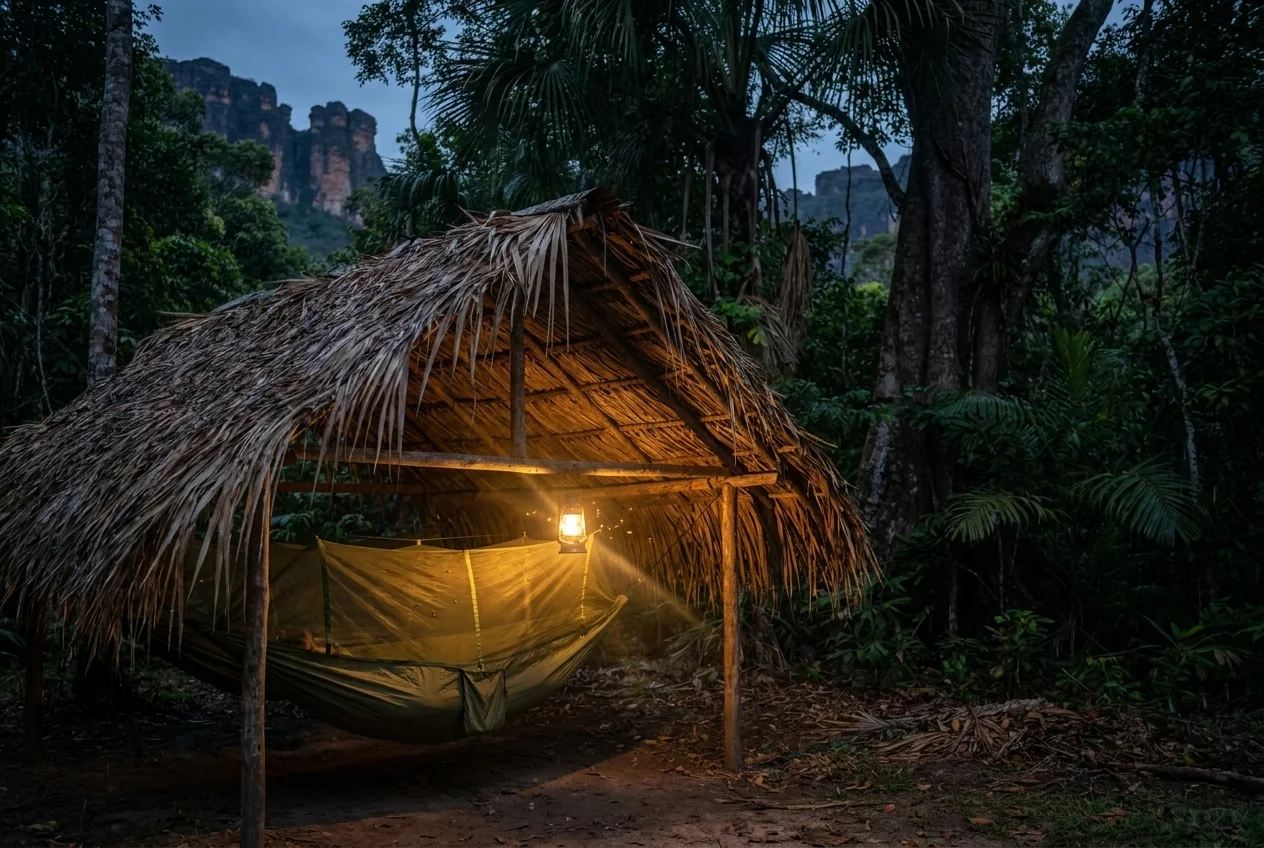
Whatever you decide about medication, bite prevention is essential and within your control. Use a strong insect repellent, cover up with long sleeves and trousers at dawn and dusk when mosquitoes are most active, and sleep under a net where one is provided. The hammock camps on the river trip typically include mosquito nets; confirm this with your operator.
Bite avoidance protects you against several diseases at once, not just malaria, so make it a constant habit rather than an occasional one. Pack more repellent than you think you need, since it is hard to find locally and you will use it every day in the jungle.
Recognizing Warning Signs
Know the basics of what to watch for after a jungle trip. A fever, chills, or feeling seriously unwell in the weeks after visiting a malaria-risk area should prompt urgent medical attention, and you should tell any doctor where you have traveled. Ask your travel clinic what symptoms warrant concern and what to do, so you are not guessing if you feel ill after returning home.
Routine and Recommended Vaccines
Beyond yellow fever, a travel clinic will review your routine vaccinations and may recommend others common for this kind of trip. These often include making sure you are up to date on tetanus, measles, and other standard immunizations, plus travel vaccines like hepatitis A and typhoid that relate to food and water exposure.
The exact list depends on your history, age, health, and itinerary, so the value of the clinic visit is a personalized plan rather than a generic checklist. Some of these vaccines are things you may already have; others may be worth topping up before a remote trip where medical care is far away.
Do not try to self-diagnose your vaccine needs from a website. Use reputable information to understand the landscape, then let a professional decide what applies to you. Getting this right well in advance means arriving protected and confident rather than worried about something you could have handled at home.
Building a Jungle First-Aid Kit
Because help is hours away, a personal first-aid and medication kit is not optional for the Angel Falls trip. Pack the basics for the environment: blister plasters and treatment, antiseptic, bandages, pain and fever relief, rehydration salts, anti-diarrheal medication, antihistamines, and any personal prescriptions in their original packaging with a copy of the prescription.
Add items specific to the conditions: strong insect repellent, after-bite treatment, high-factor sunscreen, and something for the heat such as electrolyte sachets. Waterproof the whole kit and keep it in your dry bag, since a soaked med kit is a useless one on a river trip.
Bring enough of your regular medications to cover the whole trip plus a buffer for delays, because you cannot rely on pharmacies once you leave the cities. If you have serious allergies or a condition requiring emergency medication, carry it on your person, tell your guide, and make sure a companion knows how to help.
Prescriptions and Documentation
Carry regular medications in their original labeled packaging, bring a copy of the prescription or a doctor's letter, and split your supply across bags so a single loss does not leave you without. For controlled or unusual medications, check they are permitted and documented for international travel. This paperwork is easy at home and impossible to sort in the jungle.
Water, Food, and Everyday Hygiene
Many travel illnesses come not from exotic diseases but from water and food. Drink only bottled or properly treated water, use it for brushing your teeth, and be cautious with raw salads, unpeeled fruit you did not peel yourself, and anything that is not freshly cooked and hot. Camp meals prepared over the fire are generally a safe bet.
Hand hygiene matters more than usual in a place without running water everywhere. Carry hand sanitizer and use it before eating and after the latrine. These simple habits prevent the stomach upsets that ruin more trips than any headline disease.
Dehydration is a genuine health risk in the heat and humidity, so treat drinking enough safe water as part of staying well, not just staying comfortable. Rehydration salts help when you have been sweating hard on the river or the trail. Get the everyday basics right and you avoid the most common ways travelers fall ill here.
The Heat as a Health Factor
Tropical heat and humidity are health considerations in their own right. Heat exhaustion creeps up through dehydration and overexertion, so pace yourself, rest in shade, cover up, and drink steadily. Watch older travelers and children especially. Managing the heat sensibly prevents a surprisingly common way that visitors feel unwell in Canaima.
If You Get Sick in the Interior
Part of health preparation is knowing what happens if something goes wrong far from a clinic. At the river camp and on the water you are hours from Canaima and much further from a hospital, so the realistic response to a serious problem is stabilization by your guides followed by evacuation, which is slow and costly.
This is exactly why comprehensive travel insurance with medical evacuation cover is non-negotiable and why honest self-assessment before the trip matters so much. Tell your guide about any condition or medication that could become relevant in an emergency, and make sure a travel companion knows how to help and where your kit and documents are.
For minor issues, your own well-stocked first-aid kit handles most of what arises: blisters, upset stomachs, small cuts, headaches, and the effects of heat. The goal is to be self-sufficient for the small things and insured and prepared for the rare serious ones, so a health scare never turns a remote adventure into a crisis.
Briefing Your Companions
Do not keep important health information to yourself. Tell at least one travel companion and your guide about any serious condition, allergy, or emergency medication, and show them where you keep it. In a place where you might not be able to help yourself, a companion who knows what to do and where your kit is can make all the difference.