Where to Stay in Canaima: Lodges, Camps, and Posadas Compared
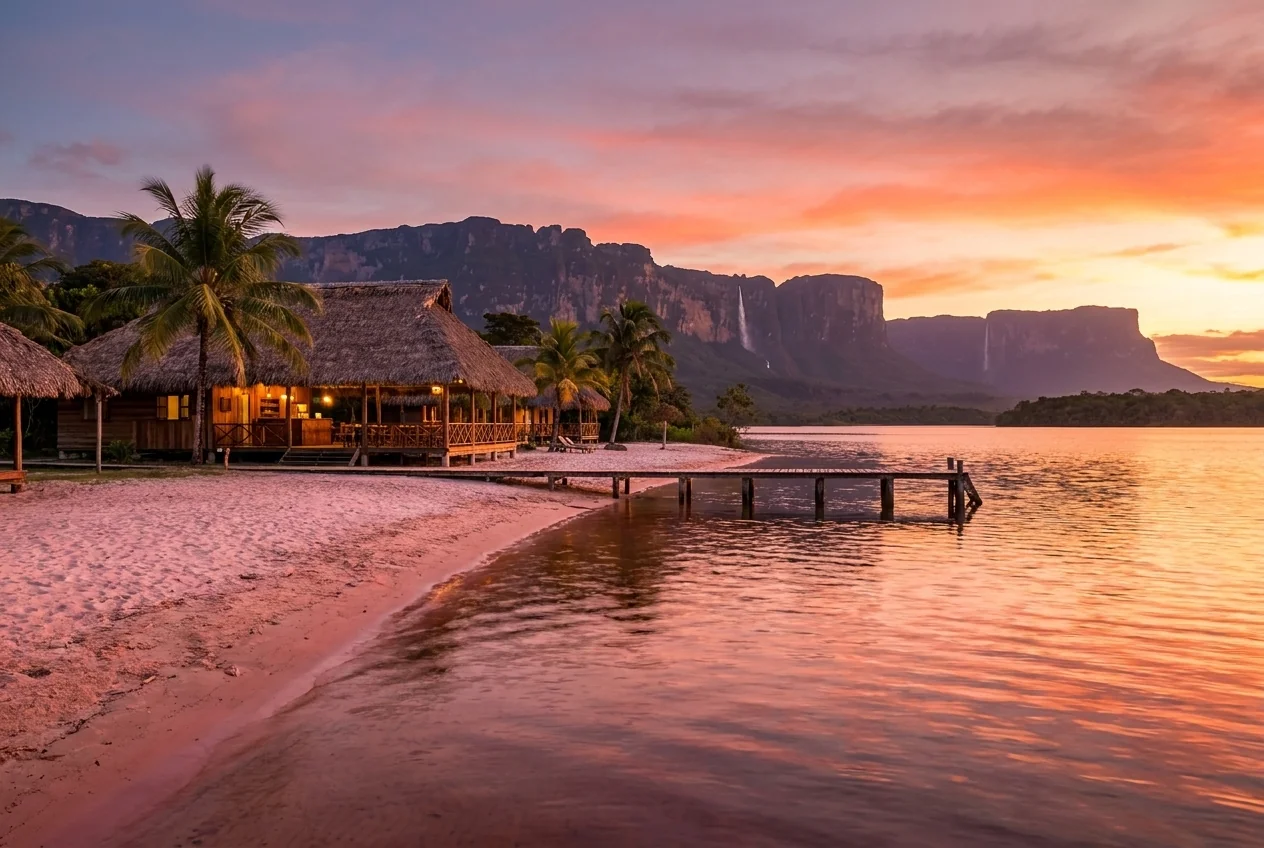
Accommodation in Canaima is simpler than most travelers expect and better than the remoteness suggests. You are staying in a village with no road access, on the edge of a lagoon, at the gateway to Angel Falls. That means your choices are posadas and small lodges in the village, plus the hammock camps you sleep at during the river trip. This guide breaks down what each option costs, how comfortable it is, and how to match your stay to the trip you are planning, so you are not guessing when you book.
How Accommodation in Canaima Works
Canaima is a small Pemon village on the shore of a lagoon, not a resort town. Almost everyone who visits sleeps in one of two places: a posada or lodge in the village before and after the falls, and a jungle camp during the river expedition itself. The two are booked and paid for differently, and most tour packages bundle the camp nights while leaving your village nights to arrange.
There are no international hotel chains, no ATMs, and limited internet. Rooms are simple, meals are often included or arranged on site, and prices are quoted in US dollars. Because the village runs on tourism to Angel Falls, most lodging can also organize your tours, boat trips, and flights, which is why picking where you stay often decides who runs your whole trip.
Book ahead for July and August, when the village fills. In quieter months you have more flexibility and can sometimes arrange a room on arrival.
Posadas: The Standard Village Stay
Posadas are family-run guesthouses and the most common place to stay in Canaima village. Expect a private or shared room, a bed with a fan or mosquito net, a shared or private bathroom, and simple, filling meals. Prices generally run $40 to $120 per night depending on the room and whether meals and tours are included.
The appeal of a posada is not luxury, it is people. The owners typically arrange your Angel Falls tour, the lagoon boat trip, and your charter flight timing, acting as a one-stop base. Many are steps from the lagoon, so you wake up to the sound of the falls that ring it.
For most independent travelers, adventure planners, and couples, a posada is the right call. It keeps costs reasonable, puts you in the hands of locals who know the logistics, and gives you a comfortable base to return to after two wet days on the river.
Lodges and Higher-Comfort Options
At the upper end, Canaima has a handful of established lodges and camps that offer more comfort: private ensuite rooms, reliable meals, better views over the lagoon, and sometimes package deals that include flights, tours, and full board. These are the properties international agencies most often book for clients who want a softer landing in a remote place.
Expect to pay more, often bundled into an all-inclusive package rather than a simple per-night rate. What you get for it is consistency: confirmed logistics, English-speaking staff at some properties, and rooms that feel like a proper base rather than a bunk between adventures.
Higher comfort in Canaima still means jungle standards. Even the better lodges can lose power at times, run on generator or solar, and offer patchy connectivity. If your expectation is a city hotel, reset it. If your expectation is a clean, comfortable room at the edge of one of the wildest places on Earth, you will be happy.
Jungle Camps During the River Trip
You do not choose your falls camp the way you choose a hotel. It comes with your tour, and it is deliberately basic. On the 2-night river expedition to Angel Falls, you sleep at a hammock camp near the falls, typically a thatched churuata sheltering rows of hammocks with mosquito nets, a simple kitchen, and a shared latrine.
There is no electricity beyond a light, no signal, and no comfort beyond what your guide's team carries in. Dinner is cooked over the camp stove, usually chicken or fish with rice and plantain. You fall asleep to the jungle and wake to mist on the river.
This is not a downgrade, it is the point. The camp is what puts you within a 90-minute hike of the tallest waterfall on Earth. Bring a headlamp, a dry set of camp clothes, and earplugs if you are a light sleeper, and the night becomes one of the most memorable parts of the trip.
Matching Your Stay to Your Trip
The right choice depends on who you are. Budget and solo travelers do well booking a modest posada directly and arranging the tour on site, keeping the whole trip affordable. Couples and adventure planners usually land on a mid-range posada or lodge that also organizes the falls tour, which balances cost and convenience.
Families and travelers who want everything handled tend to book a package through a lodge or an international agency, trading money for the certainty that flights, rooms, and tours all line up. Photographers and repeat visitors sometimes split the difference: a comfortable lagoon-view room for the village nights and the standard hammock camp on the river, because there is no other way to be at the falls at dawn.
Whatever you choose, remember that in Canaima your accommodation and your tour operator are often the same people. Picking a good place to sleep usually means picking a good team to run your trip.
Nights in Ciudad Bolivar
Most travelers also spend a night in Ciudad Bolivar or Puerto Ordaz on the way in, since Canaima charters leave early. Posadas there run roughly $25 to $80 per night and let you catch the morning flight without racing a same-day connection from Caracas. Budget for this stopover as part of the trip, not an afterthought.
Food and Meals While You Stay
Meals are simpler to sort in Canaima than accommodation, because most posadas and lodges either include them or cook them on request. Expect hearty, straightforward food: chicken or fish, rice, plantain, arepas, cassava bread, and fresh fruit. Vegetarian options exist but are limited, so flag dietary needs when you book rather than on arrival.
There is no strip of restaurants and no supermarket, so plan to eat where you sleep or where your tour provides. During the river expedition, all meals are cooked by your guide's team at the camp, and they are usually more satisfying than their simplicity suggests after a long day on the water.
Bring your own snacks, electrolyte sachets, and any specialty items from Ciudad Bolivar or home, since the village shop stocks only basics. A stash of energy bars and rehydration salts is worth its weight on the hike and in the heat, and it covers you if a weather delay stretches your stay by a day.
Water and Staying Hydrated
Drink bottled or properly treated water throughout your stay and on the river, and carry a reusable bottle you can refill from trusted sources. Dehydration is one of the most common ways travelers feel unwell in the heat and humidity, and it is entirely preventable. Ask your posada or guide where the safe water is.
How and When to Reserve
Because Canaima runs on personal relationships more than online booking engines, reserving a room can feel less formal than you are used to. Many posadas take bookings by message or email, sometimes through an intermediary in Ciudad Bolivar, and confirm verbally rather than with a slick confirmation page. That is normal here, but it means you should keep a written record of what you agreed and with whom.
Timing depends on the season. For the July and August peak, reserve your village nights and falls tour well ahead, because both rooms and charter seats fill and latecomers get stuck. In the quieter months you have far more flexibility and can often arrange everything a week or two out, or even negotiate on arrival in Ciudad Bolivar.
Because your accommodation usually organizes your tour and flight timing, treat the booking conversation as the moment to lock the whole trip together. Confirm the room, the tour, the charter, and what you owe in cash, all at once, so nothing is left dangling when you land in a village with no internet to sort it out.
Keeping a Booking Record
Save every message, price, and name from the booking process, and bring it printed or offline. Once you lose signal, a screenshot of what you agreed is your only reference if a detail is disputed. It also helps your operator pick up the thread quickly when you arrive and confirm your room and tour in person.