Angel Falls in the Dry Season: Is It Worth Visiting?
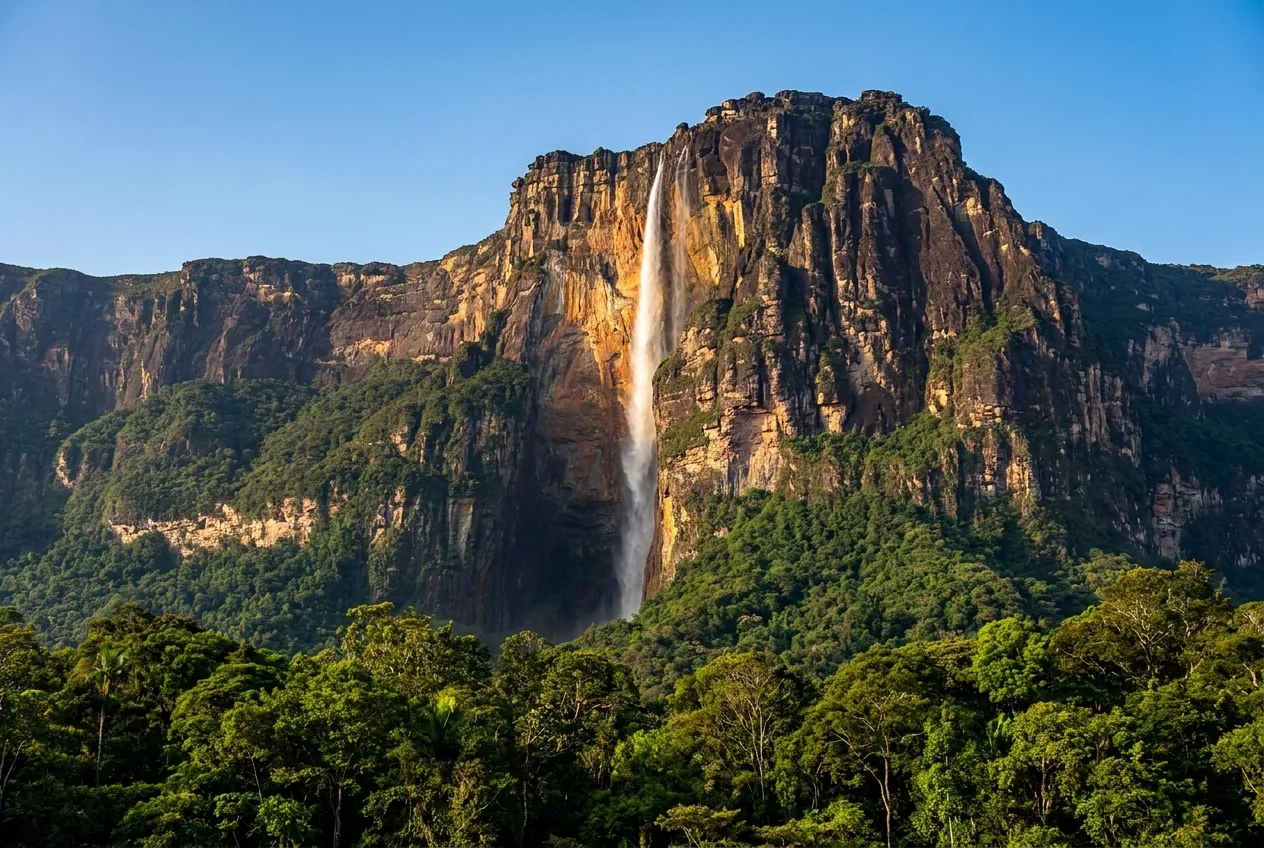
In February 2024, a traveler posted a photo of Angel Falls that looked like a wisp of steam rising from a cliff. The waterfall was barely there. The comments were brutal: "You paid $2,000 for that?" But here is the thing that photo did not tell you. That same traveler also got a cloudless helicopter overflight with views stretching 100 kilometers across the Gran Sabana, hiked to the mirador without a single other tourist in sight, and paid 30% less than peak-season visitors. The dry season at Angel Falls is not a lesser experience. It is a different one, and whether it is worth it depends entirely on what you came for.
What the Dry Season Actually Looks Like
Venezuela's dry season runs roughly from December through April, with the driest months being January through March. During this period, rainfall in the Canaima region drops dramatically, and the rivers feeding Angel Falls shrink. The Churun River, which you normally travel by motorized canoe to reach the falls, can drop so low that some sections become unnavigable.
At the falls themselves, the effect is visible. Angel Falls draws its water from rainfall on the summit of Auyantepui, and when rain stops, the flow diminishes. In the driest weeks of February and March, the waterfall can reduce to a thin ribbon or even a mist that evaporates before reaching the base. This is not every day, and it is not every year, but it happens.
The surrounding landscape changes too. The lush green jungle thins slightly, some of the smaller waterfalls in Canaima Lagoon lose their power, and the rivers run clearer and lower. The air is drier, the skies are bluer, and the mornings are noticeably cooler.
Month-by-Month Water Level Breakdown
Not all dry season months are equal. Here is what to realistically expect at the falls.
**December**: The transition month. Rains are tapering off but the rivers still carry water from November storms. The falls are usually still impressive, maybe 60 to 70% of peak flow. River trips to the falls are almost always possible. This is arguably the best dry season month because you get clearer skies with reasonable water.
**January**: Water levels drop noticeably. The falls are running at roughly 30 to 50% of peak volume. The river trip remains possible most weeks, though some shallow sections may require passengers to walk briefly. Scenic flights are highly reliable.
**February and March**: The driest months. The falls can be at 10 to 30% of peak flow, and some days the water evaporates into mist before reaching the base. River trips may be impossible due to low water levels, making scenic flights the only way to see the falls. Prices are often lowest during these months.
**April**: Rain begins returning. By late April, water levels start rising and the falls regain some presence. The river route typically reopens. This is another good transition month, similar to December but in reverse.
**May**: Officially still transitional, but rain returns in earnest. By mid-May, the falls are often at 50 to 60% of peak and the river trip is reliably operational. Many consider May one of the best overall months to visit.
The Dry Season Trade-Offs
The dry season is not a downgrade. It is a different set of advantages and limitations, and being honest about both helps you decide.
**What works better in dry season**: Scenic flights and helicopter overflights are far more reliable because cloud cover drops dramatically. You might wait days for a flyover during rainy season, but in January you can often book one for the same afternoon. The tepui formations are fully visible from the air, with no clouds obscuring the summits. Hiking conditions around Canaima are drier and more comfortable. Fewer tourists mean more personal attention from guides and smaller group sizes.
**What is worse in dry season**: The waterfall itself is less dramatic, sometimes significantly so. The river journey may be impossible in the driest months, removing what many consider the best part of the trip. The jungle is slightly less lush. Wildlife activity near the river decreases as animals move to deeper water sources.
**Neutral factors**: Temperatures are roughly the same year-round (25 to 30 degrees Celsius during the day). Mosquito activity is slightly lower in dry season. Accommodation availability is higher because demand is lower.
Who Should Visit in the Dry Season
The dry season is ideal for a specific type of traveler. If you are primarily motivated by aerial photography, the dry season is actually superior. Clear skies over the tepuis produce images that are impossible to get during the rainy months when clouds cling to the summits. Photographers who want clean shots of Auyantepui from a helicopter should target January or February.
If your schedule is inflexible and dry season is your only option, go without hesitation. Even at reduced flow, Angel Falls is 979 meters tall. The cliff face, the jungle setting, the sheer scale of the landscape, none of that changes with the seasons. You will still be standing at the base of the tallest waterfall on Earth.
If you are budget-conscious, dry season pricing can save you 20 to 30% on tour packages and accommodation. Some operators offer discounted rates specifically to attract visitors during slower months.
However, if seeing the waterfall at full power is your primary goal, wait. If the river journey through the jungle is important to you, wait. If you want the complete, classic Angel Falls experience with roaring water and the mist hitting your face at the base, the rainy season is what you are looking for.
Making the Most of a Dry Season Visit
If you are committed to a dry season trip, here is how to maximize it. Book a scenic flight or helicopter overflight as your primary way to experience the falls. The aerial perspective in clear weather is extraordinary and arguably better than the ground-level view in any season. Most operators in Canaima offer overflights for $150 to $200 per person by fixed-wing plane, or $250 to $350 by helicopter.
Spend extra time in Canaima Lagoon. Even in dry season, the lagoon's waterfalls (Salto El Sapo, Salto El Sapito, Golondrina, Ucaima) retain enough water to be spectacular, and you can walk behind Sapo Falls year-round. The lagoon is often overlooked by travelers focused solely on Angel Falls.
Consider combining your trip with a visit to the Gran Sabana. The savanna landscape, with its rolling grasslands and scattered tepuis, is beautiful year-round and does not depend on water levels. The drive from Santa Elena de Uairen to Canaima passes through some of Venezuela's most dramatic scenery.
Target December or May if you have date flexibility within the dry season window. These transition months give you the best chance of decent water flow combined with clearer weather. Read our complete best time to visit guide for more detailed seasonal planning.
Key Takeaway
A dry season visit to Angel Falls is absolutely worth it, but only if you set your expectations correctly. You are trading the roaring waterfall for clearer skies, reliable flights, fewer crowds, and lower prices. If the aerial view and the surrounding landscape matter as much to you as the water itself, the dry season delivers a rewarding trip. If seeing the falls at full power is your non-negotiable, plan for June through October instead.