Angel Falls Rainy Season: Why It's the Best Time to Visit
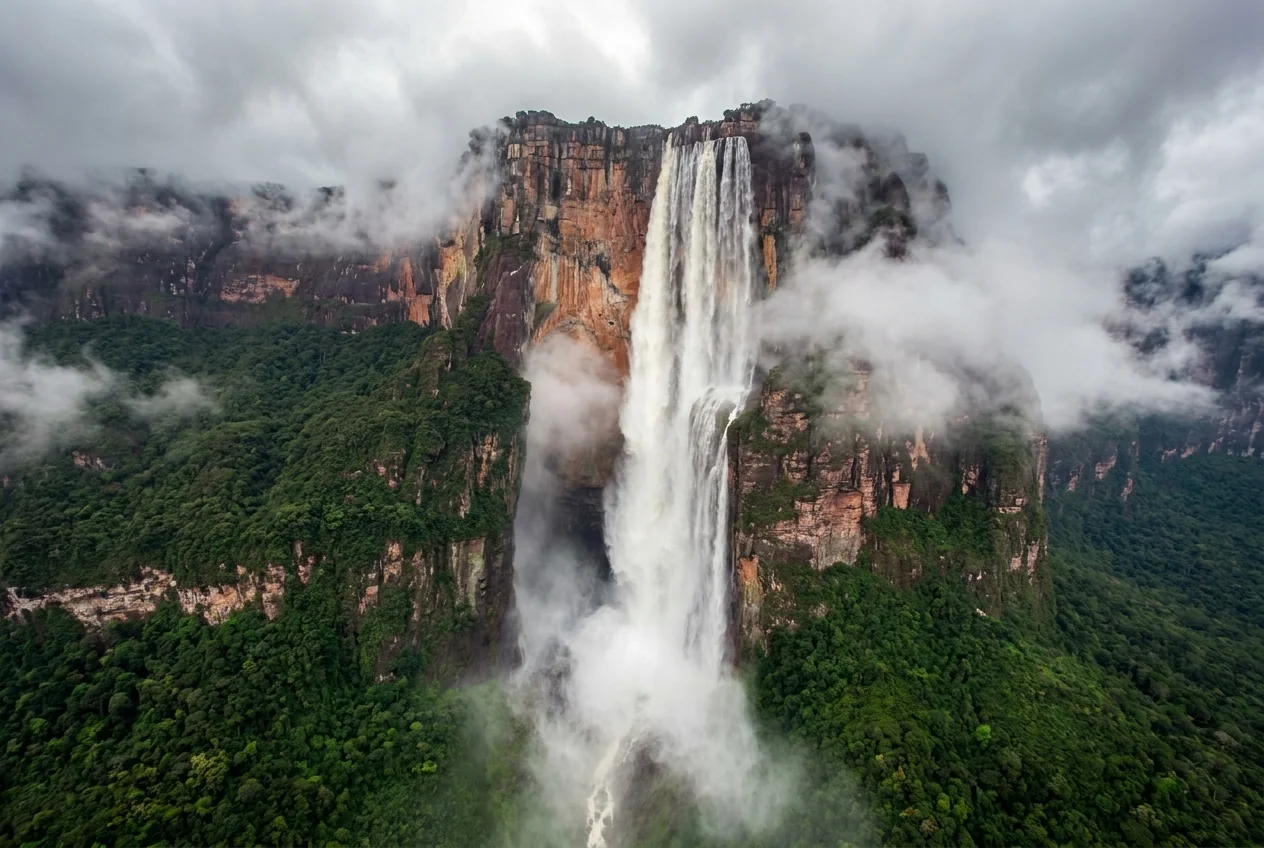
The first time you hear Angel Falls before you see it, you understand why the rainy season exists in a different category. From nearly a kilometer away, through dense jungle, you can feel the bass vibration of 300 million liters of water per hour hitting rock. During peak months, the waterfall is not just tall. It is violent, thunderous, and surrounded by a permanent cloud of mist that soaks everything within 200 meters. This is what most people imagine when they picture Angel Falls, and you only get it during the rainy season.
What Rainy Season Actually Means in Canaima
The phrase "rainy season" scares people. It conjures images of endless downpours, flooded trails, and miserable days spent waiting in a hammock. That is not how it works in Canaima.
The typical rainy-season day follows a predictable pattern. Mornings are often clear and sunny, with blue skies lasting until noon or early afternoon. Clouds build through the early afternoon, and by 2 or 3 PM, a thunderstorm rolls through. These storms are intense but short, usually lasting 30 to 90 minutes. By late afternoon, the rain stops, the jungle steams, and the light turns golden. Evenings are calm.
This pattern means you still get 5 to 7 hours of good weather every day, which is more than enough for hiking, photography, and river travel. The morning river trips to Angel Falls typically depart at 6 or 7 AM and reach the falls well before the afternoon storms arrive. Experienced guides time the journey to avoid the worst weather.
Rainfall totals in the Canaima region average 2,500 to 3,000 millimeters annually, with roughly 80% falling between June and November. For comparison, London gets about 600 millimeters per year. But London's rain is spread thinly across grey days. Canaima's rain comes in concentrated bursts, leaving the rest of the day clear.
Peak Months for Water Flow
The rainy season spans June through November, but the waterfall's power varies significantly within that window.
**June**: The rains are ramping up. The falls are noticeably stronger than in May, running at about 60 to 70% of peak flow. The river is navigable, and this month offers a good balance of water and weather. A solid choice if you want fewer tourists than peak months.
**July and August**: Water levels climb steadily. The falls are at 70 to 90% of peak volume. August often sees the river at its highest, which actually makes the canoe journey faster because there are fewer shallow spots to navigate. These are popular months with international visitors.
**September and October**: Peak flow. These two months deliver the most powerful version of Angel Falls. The waterfall is at full volume, the surrounding streams and secondary waterfalls are roaring, and the jungle is at maximum green. September is historically the wettest month, with the highest chance of afternoon storms. October is slightly less wet but still delivers massive water volume.
**November**: The rains start to ease. The falls remain powerful through mid-November, typically at 70 to 80% of peak. By late November, water levels begin dropping. This is a good shoulder-season choice with fewer tourists than September or October.
**December**: Technically transitional. Early December can still deliver strong water, but by mid-month the dry season pattern asserts itself. See our dry season guide for what to expect from December onward.
How Rain Affects the River Journey
Here is something most guides will not tell you upfront: higher water levels actually make the river trip easier. The journey from Canaima to the base of Angel Falls follows the Carrao and Churun Rivers by motorized canoe (curiara). During low water, the canoe scrapes over rocks and sandbars, sometimes requiring passengers to get out and walk while the boatmen drag the vessel through shallow sections.
During the rainy season, the rivers run deep and fast. The canoe glides over obstacles that would stop it in dry months. What is normally a 3 to 4 hour upstream journey can take 2 to 3 hours when the water is high. The rapids (particularly at Mayupa) are more exciting but also more manageable for experienced Pemon boatmen who know every rock in the channel.
The trade-off is that very heavy rain can occasionally make river travel unsafe. This is rare, maybe 5 to 10 days per season, but it happens. If the river rises too fast after an unusually heavy storm, guides will delay departure by a few hours or, in extreme cases, a day. This is why building flexibility into your itinerary matters during rainy season. A rigid 3-day schedule with no buffer can leave you stuck if weather intervenes.
One practical benefit of high water: the swimming hole at the base of Angel Falls (Pozo del Angel) is full and swimmable. In dry season, it can be too shallow or stagnant to be appealing.
Why Photographers Prefer Rainy Season
Professional landscape photographers overwhelmingly choose the rainy season, and not just because of the water volume. The light is better. Cloud formations create dramatic backdrops behind the tepui cliffs. Afternoon storms produce rainbows that arc across the falls. The jungle canopy is at maximum saturation, giving that deep emerald green that photographs so well.
The mist from the falls at peak flow creates its own microclimate. At the mirador (viewpoint), you are shooting through a constant spray that catches light in ways dry-season visitors never see. Golden hour on a rainy-season evening, when the clouds break and the sun hits the wet cliff face, produces images that define Angel Falls in the public imagination.
The challenge for photographers is obvious: keeping gear dry. Rain can arrive fast, and the mist at the falls is relentless. You need proper rain covers for your camera body and lenses, silica gel packets in your bag, and ideally a waterproof case for transit. Lens cloths are essential because the mist fogs everything within minutes.
Drone photography is more restricted during rainy season. Cloud ceilings are lower, winds at elevation are stronger, and sudden rain can end a flight instantly. If aerial drone footage is your priority, the dry season is more reliable. But if you are shooting from the ground, rainy season is superior in almost every way.
Practical Preparation for Rainy Season Travel
The rainy season requires more preparation than a dry-season visit, but nothing extreme. Here is what matters.
**Waterproofing**: Everything in your pack needs to be in a dry bag or waterproof stuff sack. Not water-resistant. Waterproof. The canoe ride splashes constantly, and afternoon storms will soak any exposed gear. Bring a quality rain jacket and rain pants, but accept that you will be wet at various points. Quick-dry clothing is essential. Cotton is useless.
**Footwear**: The trail from the river to the Angel Falls viewpoint is muddy in rainy season, sometimes shin-deep. Waterproof hiking boots with aggressive tread are necessary. Some travelers prefer sturdy sandals with heel straps for the river portions, then switch to boots for the hike. Bring both if you have space within the luggage limits.
**Flexibility**: Build at least one buffer day into your itinerary. If you have exactly 3 days for the Angel Falls excursion, a weather delay can force you to miss the falls entirely. With 4 or 5 days, a one-day delay is absorbed easily. This flexibility is the most important thing you can pack.
**Insects**: Mosquitoes and blackflies are more active during rainy season. Bring DEET-based repellent (30% concentration minimum) and consider a lightweight head net for camp evenings. The insects are worst at dawn and dusk around the river camps.
**Scenic flights**: Cloud cover makes helicopter and plane overflights less reliable. If an aerial view is important to you, keep one day completely open for a flyover and take the first clear-weather slot your operator offers. Do not wait for "better" weather. Check our packing guide for the complete gear list.
Key Takeaway
The rainy season is when Angel Falls becomes the waterfall you have seen in every documentary and dream about. The water is at full power, the jungle is alive, the river journey is smooth, and the experience is immersive in a way that dry-season visits cannot replicate. Yes, you will get wet. Yes, you need to prepare. But if you want the definitive Angel Falls experience, June through October is when you should go.