Indigenous Tourism in Venezuela: How to Travel Responsibly
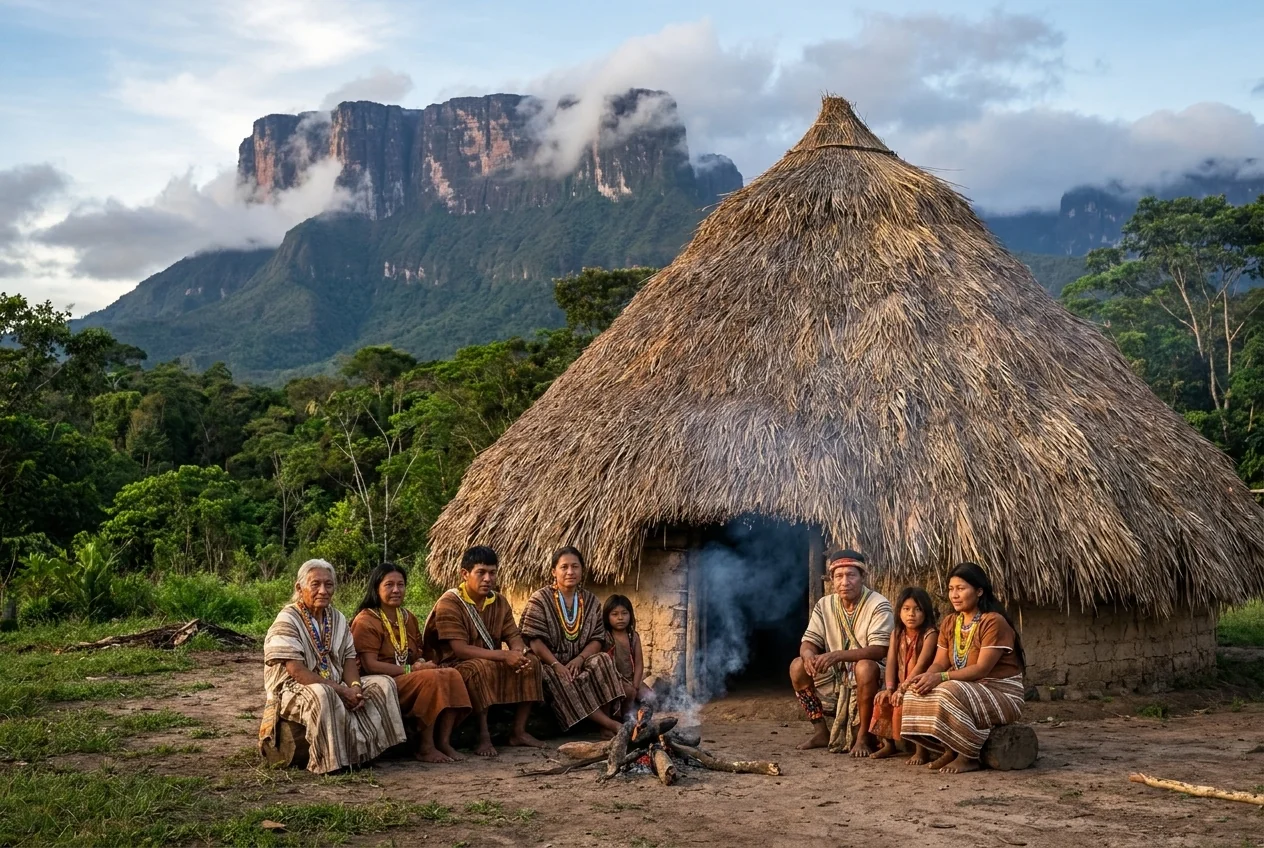
Every visitor to Angel Falls is a guest on Pemon land. The Pemon people have lived in and around Canaima National Park for thousands of years, and today they operate many of the tours, camps, and river trips that bring travelers to the base of the world's tallest waterfall. How you engage with indigenous communities during your trip matters, not just ethically, but practically. The operators you choose, the questions you ask, and the small courtesies you extend determine whether your visit strengthens or erodes the communities that make this landscape accessible.
Where Indigenous Tourism Exists in Venezuela
Two indigenous groups dominate the tourism landscape in Venezuela's most visited natural areas. The Pemon people are the primary tourism operators in Canaima National Park and the Gran Sabana. They run river trips to Angel Falls, manage jungle camps, guide treks on the tepuis, and operate posadas in Canaima village. There are roughly 30,000 Pemon spread across three subgroups (Taurepan, Arekuna, and Kamarakoto), and the Kamarakoto are the ones you will interact with most around Angel Falls.
In the Orinoco Delta, the Warao people have a smaller but growing tourism presence. Warao communities offer canoe-based tours through the delta's maze of waterways, overnight stays in traditional palafito (stilt house) camps, and demonstrations of basket weaving, fishing, and palm-heart harvesting. The Warao are one of Venezuela's oldest indigenous groups, with an estimated population of 49,000.
Smaller tourism operations exist among the Yanomami near the Brazilian border and the Yekuana along the Caura River, but these are far less accessible and require specialized expedition-level planning. For most travelers, meaningful indigenous tourism in Venezuela means the Pemon or the Warao.
Community-Run vs Operator-Run: What You Should Know
The single most important distinction in Venezuelan indigenous tourism is who controls the operation. In community-run tourism, the indigenous community owns the boats, employs the guides, manages the camps, and keeps the revenue. In operator-run tourism, an outside company (often based in Caracas or Ciudad Bolivar) hires indigenous workers as employees, typically for lower wages, while the profits flow elsewhere.
In Canaima, the picture is mixed. Some river trips are fully Pemon-operated from start to finish. Others are sold by Caracas-based agencies that subcontract Pemon boatmen and camp staff at fixed rates. The experience can look identical from the outside, but the economics are completely different.
Ask your operator directly: who owns the boats? Who runs the camp? Are the guides from the local community? A responsible operator will answer these questions without hesitation. If they deflect or cannot tell you, that is a signal. In the Orinoco Delta, community-run operations are easier to identify because most camps are physically located in Warao villages. The most authentic experiences involve staying in the village itself, not at a separate tourist camp nearby.
Cultural Etiquette That Actually Matters
Forget the generic advice about "being respectful." Here are the specific things that Pemon and Warao community members have said matter to them.
Photography comes first. Always ask before photographing anyone, especially elders and children. In Pemon communities, a simple "Puedo tomar una foto?" (Can I take a photo?) is sufficient. Most people will say yes if you ask. Taking photos without asking, particularly of ceremonies, traditional dress, or daily activities, is the fastest way to create tension.
Sacred sites are not photo opportunities. Several locations in Canaima, including specific rock formations, waterfalls, and cave areas, hold spiritual significance for the Pemon. Your guide will tell you where these are if you ask. Do not climb on, touch, or leave markings on any formation your guide identifies as significant.
Learn three words in the local language. In Pemon, "waku" means hello, "eseparuumak" means thank you, and "wakupe" means goodbye. In Warao, "dibu" means hello. These small gestures are noticed and appreciated far more than you might expect.
Do not bargain aggressively for handicrafts. Pemon basketwork and Warao woven goods take days or weeks to produce. The prices asked are almost always fair for the labor involved. If you cannot afford the asking price, simply do not buy it. Pushing for discounts on traditional crafts signals that you do not value the skill.
How to Choose a Responsible Operator
Choosing the right operator is the single biggest decision you can make for responsible indigenous tourism. Here is a practical checklist.
First, ask about community ownership. Does the community own the infrastructure (boats, camps, equipment), or does an outside company? Community ownership means revenue stays local. Second, ask about employment. Are guides, cooks, and boatmen from the local community? Are they paid wages or profit shares? Third, look for transparency. Responsible operators will tell you exactly how your money is distributed. If an operator says "a portion goes to the community" but cannot give you a percentage or a specific mechanism, be skeptical.
Fourth, check the group size. Community-run operations typically run smaller groups (4 to 8 people) because they are working with limited infrastructure. Large groups of 15 to 20 are almost always managed by outside operators using community labor. Fifth, look for cultural programming. Operators who genuinely partner with communities often include activities like cooking traditional food, visiting community gardens, or hearing oral histories. These are not staged performances but integrated parts of daily life that visitors are invited into.
The best operators in Canaima are often the hardest to find online because they operate through word of mouth and local networks rather than international booking platforms. Reaching out to the Canaima tourism cooperative directly is one of the most reliable ways to book a community-run trip.
Authentic Exchange vs Performative Tourism
There is a real difference between authentic cultural exchange and a performance staged for tourists, and experienced travelers can usually feel it. Authentic exchange happens when you participate in something the community does regardless of whether tourists are present. Eating a meal the family is already cooking. Watching a craft being made for local use, not just for sale. Hearing a story the guide tells because it matters to them, not because it is on a script.
Performative tourism looks like face painting stations, staged "traditional" dances that no one in the community actually does anymore, and photo ops with children in ceremonial clothing they wear only when a tour group arrives. These exist in Venezuela, though they are less common than in more heavily touristed indigenous destinations worldwide.
The Pemon tourism model in Canaima is, for the most part, genuinely integrated into community life. The guides who take you up the Churun River are the same men who fish and travel those waterways for their own purposes. The camps where you sleep are structures the community built and maintains. The food is what people actually eat.
This does not mean every interaction will feel deeply cultural. Some trips are more transactional than others, and that is fine. Not every Pemon guide wants to share their life story with every tourist. Respect that boundary. The goal is not to extract an "authentic experience" from people, but to participate in a tourism model that respects their agency and keeps economic benefits local.
Key Takeaway
Responsible indigenous tourism in Venezuela is not complicated, but it does require intention. Choose community-run operators, ask before you photograph, learn a few words in Pemon or Warao, and pay fair prices for crafts and services. The Pemon and Warao communities that welcome you are sharing not just a landscape, but a way of life that has endured for millennia. Your choices as a traveler help determine whether tourism strengthens or undermines that continuity.