Angel Falls vs Iguazu Falls: Which South American Waterfall Should You Visit
TL;DR: Iguazu Falls is easier, cheaper, and better for families. Angel Falls is more remote, more expensive, and a genuine wilderness adventure. If you want a comfortable, spectacular day trip, go to Iguazu. If you want an expedition that pushes you out of your comfort zone and delivers something truly rare, go to Angel Falls. If you can do both, do both, because they are completely different experiences despite both being waterfalls.
Two Completely Different Waterfall Experiences
Comparing Angel Falls and Iguazu Falls is like comparing a solo mountaineering expedition to a visit to the Grand Canyon. Both are extraordinary. Both involve water and cliffs and nature at a scale that makes you feel small. But the experience of getting there, being there, and what you carry home could not be more different.
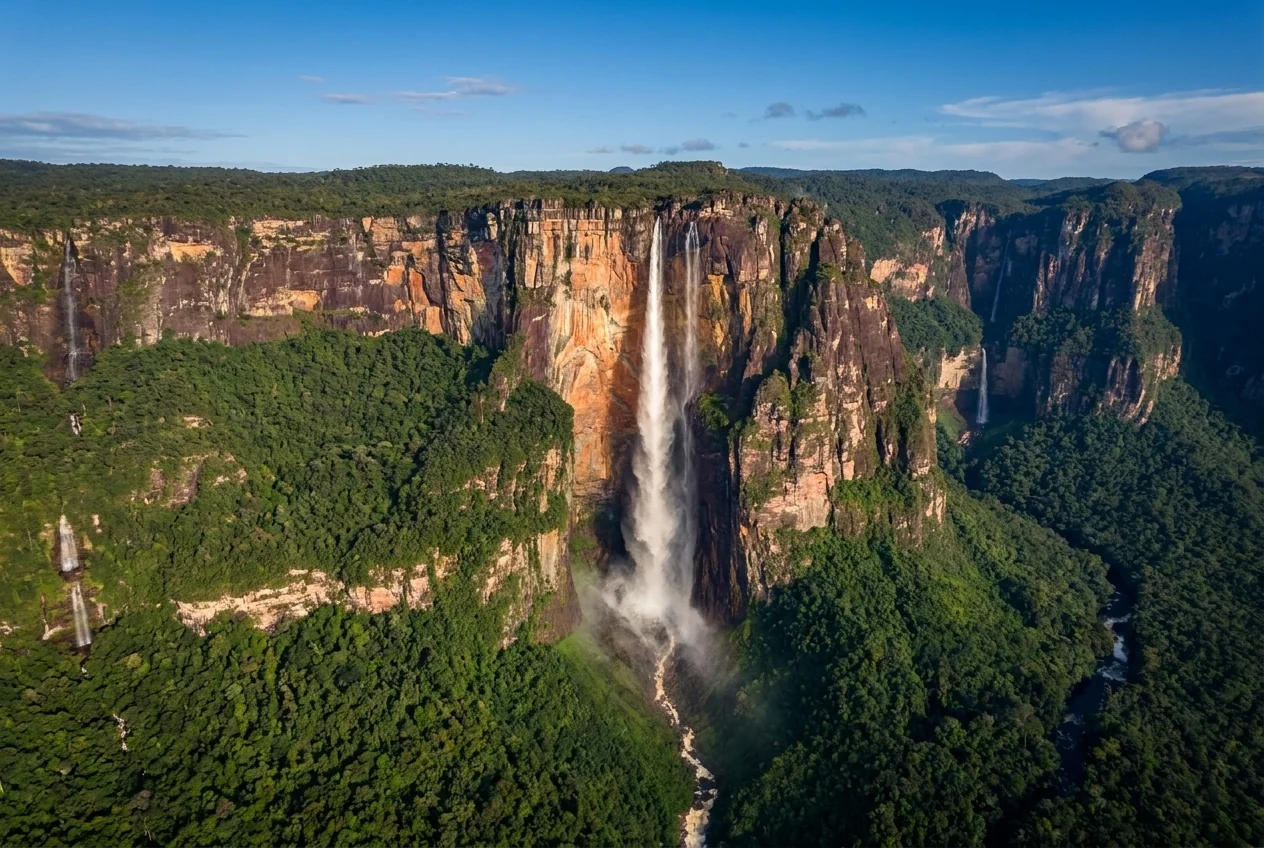
Angel Falls is a single vertical line of water dropping 979 meters from the summit of Auyantepui, a flat-topped mountain (tepui) in the Venezuelan jungle. Reaching it requires a flight to a village with no roads, a multi-hour river journey in a dugout canoe, an overnight in a hammock camp, and a hike through dense jungle to a viewpoint. The entire trip is an expedition.
Iguazu Falls is a curtain of 275 waterfalls stretched across a 2.7-kilometer crescent of basalt cliffs on the Argentina-Brazil border. You arrive by commercial flight, drive to a well-maintained national park, and walk along paved pathways to viewpoints that put you within meters of the water. You can do the whole thing in a day and sleep in a proper hotel.
The Cost Gap Is Real
The cost difference between these two trips is significant and worth understanding upfront. Iguazu Falls is accessible from two major gateway cities (Buenos Aires and Sao Paulo) with frequent, affordable flights. Budget airlines serve the route. Hostels near the park cost $15 to $30 per night. The park entrance fee is $25 to $40 depending on which side you visit. A couple traveling on a budget from within South America can experience Iguazu for under $500 per person, total.
Angel Falls has a much higher cost floor. There is no budget way to reach Canaima, the charter flight alone costs $250 to $450 per person. You cannot visit the falls without a guided tour ($350 to $800), and there are no hostels or budget accommodations in the area. Even the most cost-conscious traveler will spend $1,500 to $2,000 per person from the United States, and most spend $2,500 to $3,500. Read our full cost breakdown for detailed pricing.
Is Angel Falls worth three to five times the price of Iguazu? That depends on what you value. If the experience of reaching a waterfall matters as much as the waterfall itself, the answer is yes. If you want the best spectacle for the lowest cost, Iguazu wins decisively.
Accessibility and Logistics
Iguazu is one of the most accessible natural wonders on the planet. From Buenos Aires, you fly 1.5 hours to Puerto Iguazu, take a 20-minute taxi to the Argentine park entrance, and you are standing at the Devil's Throat viewpoint within 2 hours of landing. The Brazilian side is equally straightforward from Foz do Iguacu. Both parks have paved paths, wheelchair accessibility on many routes, restaurants, gift shops, and rangers stationed throughout. Families with young children, elderly travelers, and people with mobility limitations can all visit comfortably.
Angel Falls requires genuine logistical planning. You fly internationally to Caracas, then domestically to Ciudad Bolivar, then by charter to Canaima. From Canaima, you travel 3 to 4 hours by motorized canoe up the Churun River, hike 90 minutes through jungle, and then you are at the viewpoint. The return trip takes another full day. There are no paved paths, no restaurants, no cell service, and no medical facilities closer than Canaima village. This remoteness is part of the appeal, but it also means Angel Falls is not accessible to everyone.
For travelers with physical limitations, Iguazu is the clear choice. For adventurers who thrive on remoteness and challenge, Angel Falls delivers something no easy-access waterfall can match.
The Visual Experience
This is where personal preference matters most. Angel Falls is vertical. It is one impossibly tall column of water falling from a cliff so high that the water partially atomizes into mist before reaching the base. The scale is difficult to comprehend when you are standing at the bottom. The surrounding jungle and the sheer cliff face of Auyantepui create a frame that makes the falls feel like they belong in a different geological era.
Iguazu is horizontal. It is a panoramic wall of water that stretches farther than you can see from any single viewpoint. The Devil's Throat, where 14 falls converge into a thundering U-shaped chasm, produces so much spray that permanent rainbows hover above the water on sunny days. The sound is overwhelming. The volume of water (roughly 1,500 cubic meters per second on average) is felt in your chest as much as heard.
Photographers face different challenges at each. Angel Falls rewards patience and aerial access, with the best shots coming from helicopter overflights in clear weather. Iguazu rewards exploration, with dozens of viewpoints across both the Argentine and Brazilian sides producing completely different compositions. Both waterfalls photograph beautifully, but Iguazu is easier to capture well because of the established infrastructure.
Best Season Considerations
Conveniently, the peak seasons for these two waterfalls are roughly opposite, which matters if you are planning to visit both.
Angel Falls is best during Venezuela's rainy season, June through October, when water flow is at maximum. The dry season (December through April) brings clearer skies but reduced water, sometimes dramatically. See our rainy season guide and dry season guide for detailed month-by-month breakdowns.
Iguazu Falls is best during the southern hemisphere wet season, November through March, when water volume peaks. However, Iguazu is impressive year-round because its water source (the Iguazu River) has a much larger watershed than Angel Falls' rain-dependent flow from Auyantepui's summit. Even in the dry season (June through August), Iguazu carries enough water to be spectacular.
If you want to visit both on a single South American trip, consider traveling in June or November, when one waterfall is at peak flow and the other is at a respectable level.
Who Should Visit Which (and Why Not Both)
The honest answer is that these waterfalls serve different travelers, and neither is objectively "better."
Choose Iguazu if you are traveling with family (especially young children or older relatives), if you have limited time (3 days or fewer), if you want a comfortable trip with reliable infrastructure, or if you are on a tighter budget. Iguazu delivers one of the most spectacular natural displays on Earth without requiring any sacrifice of comfort or accessibility.
Choose Angel Falls if you crave adventure and remoteness, if the journey matters as much as the destination, if you want to experience indigenous Pemon culture firsthand, or if you want to see something that fewer than 20,000 people visit each year. Angel Falls is not just a waterfall. It is a multi-day expedition into one of the most remote corners of South America.
If you can do both, do both. They complement each other perfectly. Iguazu shows you the raw power of water at massive volume. Angel Falls shows you the raw scale of a geological anomaly that should not exist. Together, they represent the two extremes of what waterfalls can be.
At a Glance
| Criterion | Angel Falls | Iguazu Falls |
|---|---|---|
| Height and Scale | Angel Falls: 979m single uninterrupted drop, the tallest waterfall on Earth. One massive column of water falling from a flat-topped mountain. | Iguazu Falls: 275 individual falls spread across 2.7km of cliff face. The largest is 82m tall. Total volume dwarfs Angel Falls. |
| Accessibility | Angel Falls: Remote. Requires a flight to Canaima (no roads), then a multi-hour river journey by motorized canoe. Minimum 4-5 days from any major city. | Iguazu Falls: Easy. Direct flights from Buenos Aires (1.5h) and Sao Paulo (1.5h). Walkways and viewpoints accessible within 30 minutes of the park entrance. |
| Total Trip Cost (per person) | Angel Falls: $1,500-$3,000 from the US, including international flight, domestic charter, tour, and accommodation. Budget options exist but the floor is high. | Iguazu Falls: $500-$1,500 from within South America. Budget backpackers can do it for under $500. The falls themselves cost only a park entrance fee ($25-$40). |
| Time Required | Angel Falls: 4-5 days minimum. Most itineraries are 5-7 days including transit. You cannot rush this trip. | Iguazu Falls: 2-3 days is plenty. Some travelers see both the Argentine and Brazilian sides in a long day trip. |
| Experience Type | Angel Falls: Wilderness expedition. River journey through jungle, overnight in hammock camps, hiking to viewpoints. Raw, physical, immersive. | Iguazu Falls: Family-friendly park experience. Paved walkways, restaurants, boat rides, visitor center. Comfortable, accessible, well-organized. |
| Best Season | Angel Falls: June-October (rainy season) for peak water. Dry season (Dec-Apr) for clearer skies but less water. | Iguazu Falls: November-March (wet season) for peak flow. April-June for fewer crowds with good water. Year-round viable. |
| Photography | Angel Falls: Iconic single-frame composition. Challenging conditions (mist, jungle canopy). Aerial photography outstanding. Fewer crowds in shots. | Iguazu Falls: Multiple dramatic angles from walkways. Rainbow-rich. Easier to get great shots. More people in frame during peak times. |
| Crowd Level | Angel Falls: 15,000-20,000 visitors per year. You might share the viewpoint with 5-10 other people. | Iguazu Falls: 1.5-2 million visitors per year. Peak days can feel crowded at popular viewpoints like Devil's Throat. |
The Verdict
There is no wrong choice here, only different priorities. Families, comfort-seekers, and travelers short on time should visit Iguazu Falls first. It is one of the most impressive natural sights on the planet, easy to reach, and affordable. Adventure travelers, photographers chasing unique compositions, and anyone drawn to genuine remoteness should make Angel Falls the priority. The expedition to reach it is half the experience, and the falls themselves are unlike anything else on Earth. If you can swing both (and they work well as bookends to a South American trip), you will leave with two completely different but equally unforgettable waterfall experiences. Start planning your Angel Falls trip with our complete guide, or explore how to combine Angel Falls with other destinations.